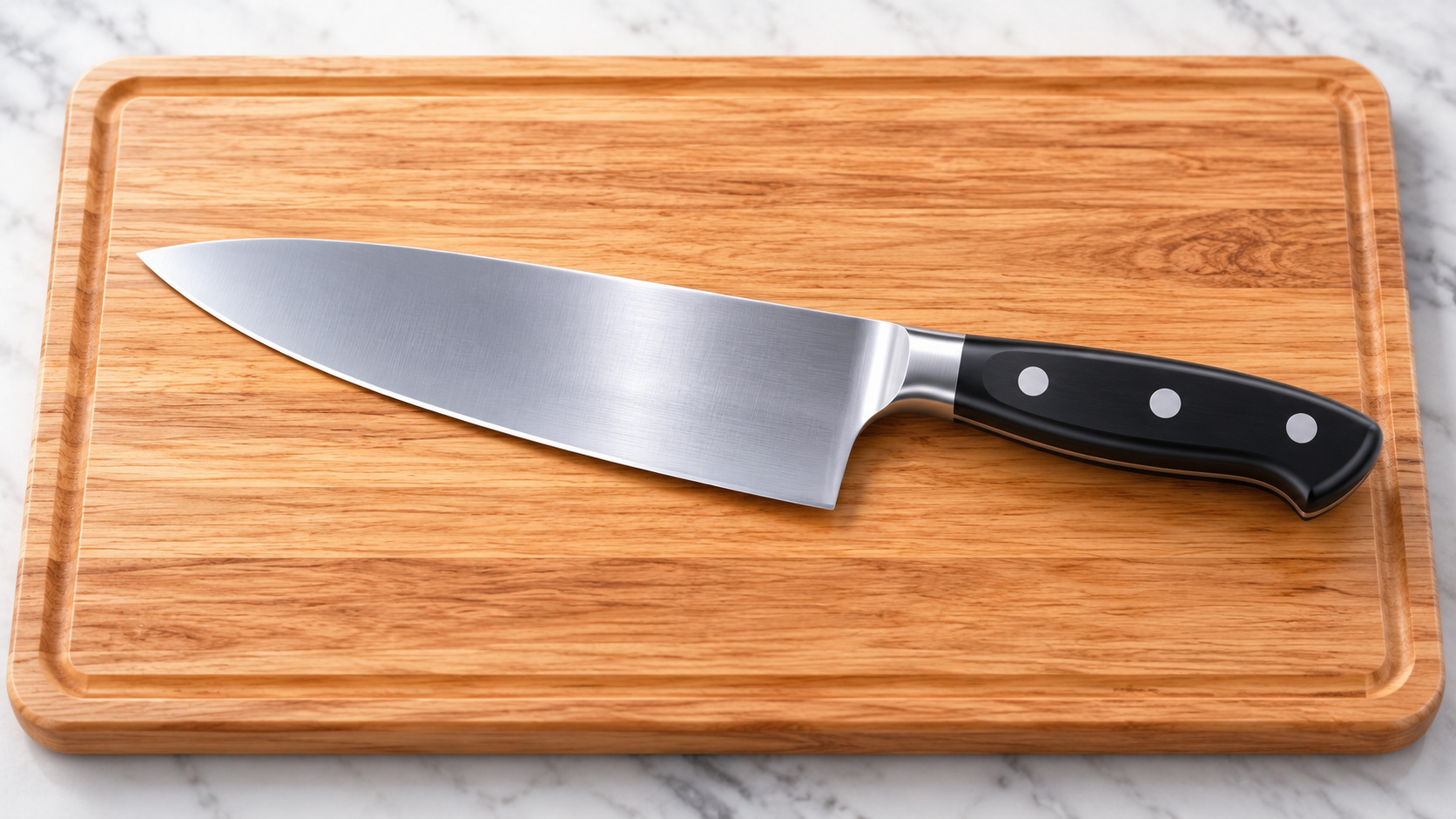
You don’t need to spend hundreds of dollars to own a genuinely good Japanese kitchen knife. Under $100, several well-established Japanese manufacturers produce knives that hold a sharp edge, cut cleanly, and hold up to years of home use — they’re just a different category of product than the hand-forged, single-bevel knives that dominate high-end “best Japanese knives” lists.
The knives in this price range are almost universally mass-produced, factory-finished blades from established makers like Tojiro, Fujiwara Kanefusa, MAC, and Misono, rather than the artisan-forged blades you’ll find at $300 and up. That’s not a downside so much as a different value proposition: consistent stainless steel, dependable fit and finish, and an easy path into Japanese knives without the price or maintenance demands of a premium forged blade. Choosing well at this price mostly comes down to steel type, blade shape, and how much maintenance you’re willing to take on.
It’s worth setting expectations clearly before diving into specific picks. A $90 factory-made gyuto and a $400 hand-forged blade from a small workshop are both genuinely “Japanese knives,” but they’re built to different standards and serve different kinds of buyers. The knives in this guide are aimed at home cooks who want a reliable, well-made daily tool — not collectors chasing the craftsmanship and rarity that drive prices well beyond this range. Within that context, the brands covered here represent some of the most consistently well-reviewed options available at this price point.
This guide compares seven Japanese chef knives typically available around or below $100, based on published manufacturer specifications and established product characteristics, so you can find the right one whether you’re buying your first Japanese knife or adding an affordable second blade to your kitchen.
Quick Picks
- Best Overall: Tojiro DP Gyuto
- Best Budget: Fuji Narihira
- Best Santoku: Tojiro DP Santoku
- Best Lightweight: MAC Chef Series
- Best Compact: Tojiro DP Petty
- Best Traditional Option: Fujiwara Kanefusa FKM
- Best Step-Up: Misono Molybdenum
Comparison Table
| Knife | Type | Steel | Blade Length | Best For | Maintenance |
|---|---|---|---|---|---|
| Tojiro DP Gyuto | Gyuto | VG-10 (clad) | 210mm | All-around use | Low |
| Fuji Narihira | Gyuto | Molybdenum stainless | 210mm | Lowest-cost entry | Low |
| MAC Chef Series | Gyuto | Molybdenum stainless | 215mm | Lightweight prep | Low |
| Tojiro DP Santoku | Santoku | VG-10 (clad) | 170mm | Vegetable-heavy cooking | Low |
| Fujiwara Kanefusa FKM | Gyuto | AUS-8 Molybdenum Vanadium | 210mm | First Japanese knife | Low |
| Misono Molybdenum | Gyuto | Molybdenum stainless | 210mm | Stepping up in quality | Low-moderate |
| Tojiro DP Petty | Petty/Utility | VG-10 (clad) | 120mm | Small, detailed tasks | Low |
Prices are typically available around or below $100 depending on retailer, blade size, and availability — always confirm current pricing before purchase, since Japanese knife pricing shifts with import costs and exchange rates.
What Do You Actually Get for $100?
Under $50 generally gets you entry-level stainless knives with simpler handles and softer steels — the Fuji Narihira falls at the lower end of this range, prioritizing an accessible price over refined steel or fit and finish.
$50–80 is where you start seeing more established Japanese brand names, improved blade geometry, and steels chosen specifically for a balance of edge retention and ease of sharpening. The Fujiwara Kanefusa FKM and MAC Chef Series both sit in this tier.
$80–100 is where VG-10 steel options become available, along with generally stronger fit and finish and better long-term ownership value. The Tojiro DP line and the 210mm Misono Molybdenum both fall into this range.
It’s worth being clear that spending more within this range doesn’t automatically mean a better knife for your specific needs — a lighter, simpler knife like the MAC Chef Series may suit a home cook better than a heavier VG-10 blade, regardless of price. The right pick depends more on blade shape, weight, and maintenance preferences than on chasing the highest steel spec available under $100.
Another strong option under $100 is the Sakai Takayuki TUS Steel Gyuto 210mm, a Japanese-made stainless gyuto with a 210mm double-edged blade and rust-resistant TUS steel. It is a practical choice for home cooks who want a traditional Japanese chef’s knife without moving into premium pricing.
If you are ready to move beyond a single knife, our Best Japanese Knife Sets in 2026 guide compares four Sakai Takayuki sets for home cooks across different budgets and configurations.
The 7 Best Japanese Chef Knives Under $100
Tojiro DP Gyuto — Best Overall
Best for: A dependable, all-purpose Japanese chef knife
Why we picked it: The Tojiro DP series is widely regarded as one of the best values in Japanese knives at any price, let alone under $100, thanks to its VG-10 steel core clad between softer stainless layers — a construction that balances genuine edge retention with easier sharpening than a mono-steel VG-10 blade.
Blade / steel: VG-10 core, 3-layer clad stainless construction, hardness around 60 HRC, 210mm blade length
Key strengths:
- VG-10 core steel offers better edge retention than the molybdenum steels used in most knives at this price
- Clad construction makes sharpening easier than a full VG-10 blade
- Winner of a Good Design Award, reflecting broadly solid fit and finish
Potential drawbacks: Sits at the higher end of this price range, and the composite handle is functional rather than distinctive.
Who should buy it: Home cooks who want the best steel available in this price range and are comfortable with the higher end of the budget.
Typically available around or below $100 depending on retailer, size, and availability.
If you are also considering options beyond the $100 range, see our Best Japanese Gyuto Knives in 2026 guide for seven gyuto picks across multiple price and performance tiers.
Fuji Narihira — Best Budget
Best for: The lowest-cost way to try a genuine Japanese chef knife
Why we picked it: The Narihira is consistently cited as one of the cheapest genuinely recommendable Japanese chef knives available, making it a low-risk way to try the format before committing to a pricier upgrade.
Blade / steel: Molybdenum stainless steel, 210mm blade length
Key strengths:
- Among the most affordable knives in this comparison
- Lightweight and easy to handle for a first Japanese knife
- Straightforward stainless steel maintenance
Potential drawbacks: Simpler fit and finish than pricier options in this list, and the steel won’t hold an edge as long as VG-10.
Who should buy it: Anyone testing whether a Japanese gyuto suits their cooking style before spending more.
Typically available around or below $100 depending on retailer, size, and availability.
MAC Chef Series — Best Lightweight Option
Best for: Cooks who prioritize a thin, nimble blade
Why we picked it: MAC’s Chef series is well regarded for its thin grind and light overall weight, making it a comfortable option for cooks who find heavier gyutos tiring during long prep sessions.
Blade / steel: Molybdenum stainless steel, thin blade profile, 215mm blade length
Key strengths:
- Notably lightweight compared to most gyutos in this price range
- Thin blade profile cuts cleanly through vegetables and boneless proteins
- Established, reputable Japanese knife brand
Potential drawbacks: The bolsterless design (on base models) means less protection for fingers near the handle, and the thin blade requires more careful handling around bone.
Who should buy it: Home cooks who want a light, nimble knife and don’t need heavy-duty cutting power.
Typically available around or below $100 depending on retailer, size, and availability.
Tojiro DP Santoku — Best Santoku
Best for: Home cooks who primarily prep vegetables
Why we picked it: The Tojiro DP Santoku shares the same VG-10 clad construction as the brand’s gyuto, giving vegetable-focused cooks the same steel quality and edge retention in the more compact, beginner-friendly santoku shape.
Blade / steel: VG-10 core, 3-layer clad stainless construction, around 170mm blade length
Key strengths:
- Same trusted VG-10 core steel as the well-regarded DP Gyuto
- Compact santoku shape suits smaller kitchens and vegetable-heavy prep
- Consistent fit and finish across the DP line
Potential drawbacks: Less versatile than a gyuto for larger cuts of meat or bigger produce.
Who should buy it: Cooks who want a Japanese santoku with genuinely good steel rather than an entry-level budget blade.
Typically available around or below $100 depending on retailer, size, and availability.
Fujiwara Kanefusa FKM — Best Traditional Budget Gyuto
Best for: A classic, no-frills first Japanese knife
Why we picked it: The FKM series uses AUS-8 Molybdenum Vanadium steel, specifically chosen for a balance of edge retention and easy sharpening that suits first-time Japanese knife owners, and it’s frequently recommended specifically for that reason.
Blade / steel: AUS-8 Molybdenum Vanadium stainless steel, hardness around 57–58 HRC, 210mm blade length
Key strengths:
- Steel hardness specifically chosen to be easy to sharpen for beginners
- Lightweight (around 165g) and comfortable pakkawood handle
- Long-standing reputation as a recommended first Japanese knife
Potential drawbacks: Softer steel than VG-10 options means more frequent sharpening for heavy use.
Who should buy it: First-time Japanese knife buyers who want a classic, well-reviewed entry point without paying for premium steel they may not yet need.
Typically available around or below $100 depending on retailer, size, and availability.
Misono Molybdenum — Best Step-Up Option
Best for: Cooks who want a more refined blade without leaving this price range
Why we picked it: Misono is a well-regarded, professionally recognized Japanese knife brand, and its Molybdenum line offers a thinner, more refined grind than several other knives in this comparison, while the 210mm size typically remains within budget.
Blade / steel: Molybdenum stainless steel, 210mm blade length
Key strengths:
- Strong reputation among professional and serious home cooks
- Thinner, more refined blade geometry than most budget gyutos
- Good edge retention for a molybdenum steel
Potential drawbacks: The larger 240mm version typically runs above $100, so buyers focused on staying under budget should stick with the 210mm size.
Who should buy it: Cooks who’ve outgrown entry-level knives and want a step up in refinement while staying within a tighter budget.
Typically available around or below $100 depending on retailer, size, and availability — the 210mm size is more likely to stay within budget than the 240mm.
Tojiro DP Petty — Best Compact / Utility Option
Best for: Small, detailed tasks that don’t need a full-size gyuto
Why we picked it: The Petty shares the DP line’s VG-10 clad construction in a smaller utility knife format, making it a practical second knife for peeling, trimming, and detailed work alongside a full-size gyuto or santoku.
Blade / steel: VG-10 core, 3-layer clad stainless construction, around 120mm blade length
Key strengths:
- Same reliable VG-10 core steel as the rest of the DP line
- Compact size suits detailed prep work a gyuto isn’t built for
- Affordable even relative to other knives in this list
Potential drawbacks: Not a replacement for a full-size chef knife — this is a supplementary tool.
Who should buy it: Anyone who already owns or is buying a full-size Japanese knife and wants a matching utility blade for smaller tasks.
Typically available around or below $100 depending on retailer, size, and availability.
Gyuto or Santoku Under $100?
Most of the knives on this list are gyutos, but the Tojiro DP Santoku offers a direct comparison point within the same steel and construction. In general:
Gyuto
- Longer blade (usually 210mm+)
- More versatile — handles meat, large produce, and detailed work
- Better suited to a rocking, Western-style cutting motion
Santoku
- Shorter blade (typically 165–180mm)
- More compact, well suited to smaller kitchens
- Better suited to vegetable-heavy prep and a straight up-and-down chopping motion
For a full breakdown of the differences, see our Gyuto vs Santoku comparison. If you’re unsure, a 210mm gyuto remains the more broadly recommended first knife, since it handles a wider range of tasks than a santoku’s more specialized shape.
Stainless vs. Carbon Steel Under $100
Nearly every knife on this list uses stainless steel, and that’s a deliberate choice for this price range and audience.
Stainless steel (VG-10, AUS-8, and general molybdenum blends) resists rust with minimal care, making it the more forgiving, beginner-friendly choice — you can leave it briefly wet without immediate rust risk, though thorough drying after washing is still good practice.
Carbon steel can take an exceptionally keen edge and is prized by some cooks for that reason, but it requires more diligent drying and occasional oiling to prevent rust, and it will develop a patina over time. Very few genuinely good carbon steel options exist at this price point, which is part of why this list leans almost entirely stainless — carbon steel knives with comparable fit and finish tend to sit above the $100 range.
For most first-time buyers, a stainless option from this list is the more practical starting point, with carbon steel worth considering only once you’re comfortable with the extra maintenance it demands.
If you are also considering options beyond the $100 range, see our Best Japanese Gyuto Knives in 2026 guide for seven gyuto picks across value, mid-range, and premium tiers.
Frequently Asked Questions
What is the best Japanese chef knife under $100?
The Tojiro DP Gyuto is generally considered the strongest overall pick in this price range, thanks to its VG-10 core steel — a genuine step up in edge retention compared to the molybdenum steels used in most other knives under $100.
Can you get a good Japanese knife for under $100?
Yes. While premium hand-forged Japanese knives run well above $100, established manufacturers like Tojiro, Fujiwara Kanefusa, MAC, and Misono all produce genuinely well-regarded, factory-made knives within this budget.
Is Tojiro DP worth buying?
Yes, it’s widely regarded as one of the best values in Japanese knives at any price. Its VG-10 core steel offers better edge retention than most competitors in the same price range, while remaining easier to sharpen than a full VG-10 blade thanks to its clad construction.
Is a gyuto or santoku better for beginners?
A gyuto is generally the more versatile choice for a first knife, handling a wider range of tasks — meat, large produce, and detailed work — than a santoku’s more specialized, vegetable-focused shape.
What steel is best for a budget Japanese knife?
VG-10, used in the Tojiro DP line, generally offers the best edge retention among the steels found under $100. AUS-8 and general molybdenum steels, used in the Fujiwara FKM, Misono, and MAC lines, trade some edge retention for easier sharpening, which suits many first-time buyers.
Are cheap Japanese knives hard to maintain?
No — the stainless steel knives on this list are all relatively low-maintenance, requiring only basic hand-washing, drying, and periodic sharpening. This is one of the main reasons stainless steel dominates this price range rather than carbon steel, which demands more attentive care.
Should I buy a gyuto and a santoku, or just one knife under $100?
For most home cooks starting out, one well-chosen gyuto covers the widest range of tasks and is the more practical single purchase. If your budget allows for two knives, pairing an affordable option like the Fuji Narihira or Fujiwara FKM with a compact utility knife like the Tojiro DP Petty often provides more everyday versatility than two full-size knives of the same type.
This article is an independent, research-based buying guide. Recommendations are based on published manufacturer specifications and established product characteristics rather than first-hand testing. Pricing is not guaranteed to remain under $100 at all times — always verify current pricing before purchase, and note the distinction between knives genuinely made in Japan by established manufacturers and products merely marketed with “Japanese-style” branding.
For more on this category, see our guides to best Japanese chef knives for home cooks, Gyuto vs Santoku, VG10 vs SG2, and best whetstones for Japanese knives.