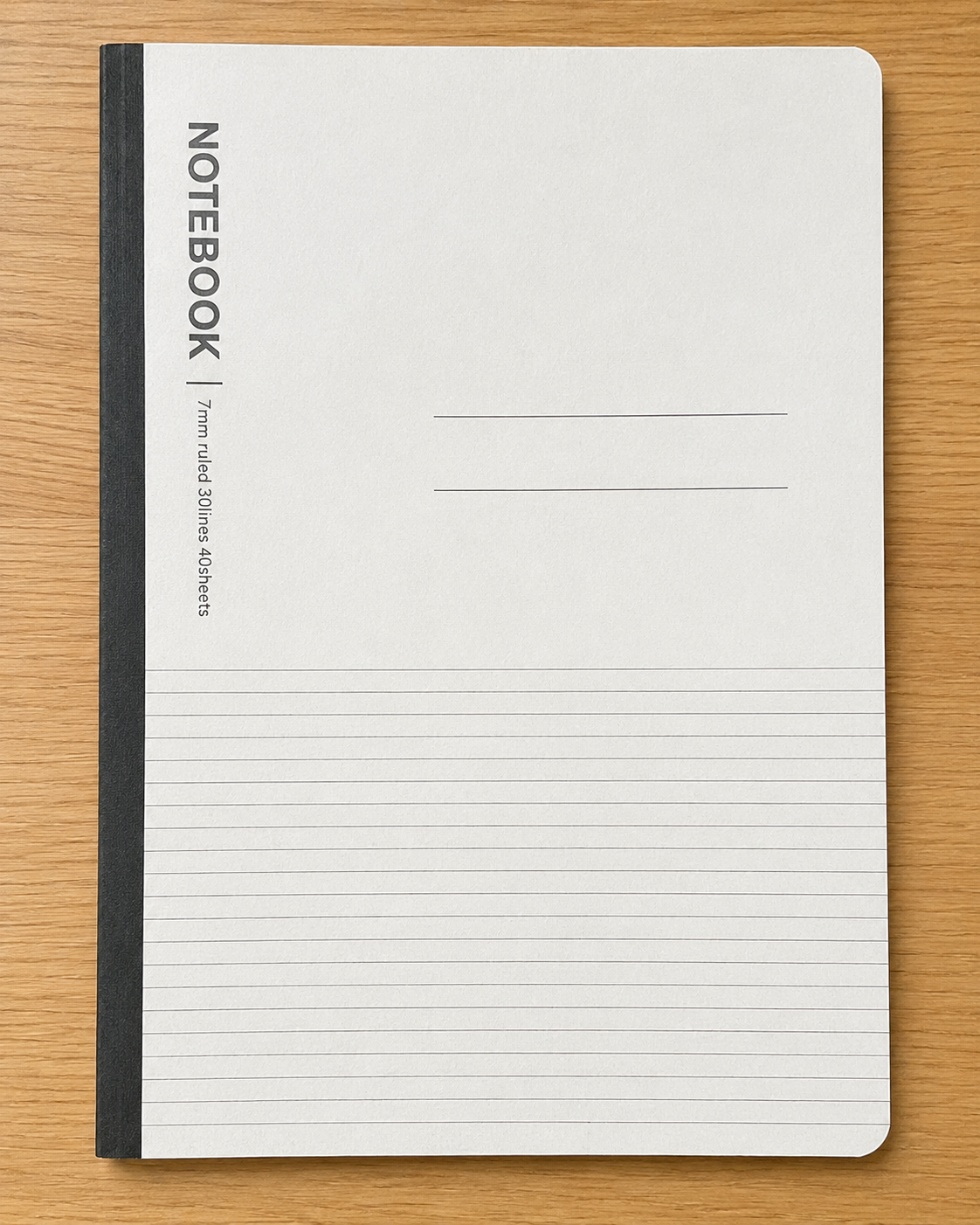
Japanese notebooks have built a global reputation that goes well beyond their home market. Ask a fountain pen collector, a bullet journal enthusiast, or a university student anywhere in the world which notebooks they trust most, and brands like Kokuyo, Midori, Maruman, Life, and Apica come up again and again.
That reputation isn’t accidental. Japanese stationery makers treat paper as a specialized craft rather than a commodity. Companies like Midori and Life develop their own proprietary paper formulas specifically tuned for how ink behaves on the page, rather than buying generic industrial stock. Binding styles are chosen for function first — twin-ring spirals, thread stitching, and Kokuyo’s perfect binding all exist because Japanese notebook culture prioritizes a notebook that lies flat and survives daily use in a bag, not just one that looks good on a shelf.
This guide compares ten notebooks — six well-known Japanese brands plus three widely used international alternatives — based on publicly available manufacturer specifications, so you can see how paper weight, binding, and price actually compare before deciding what to buy.
If you’re also exploring Japanese writing instruments, our guide to the best Japanese pens covers many of the same brands from the pen side, and pairs naturally with the notebooks below.
Quick Comparison Table
| Notebook | Paper Weight | Binding | Best For | Price Range (US) |
|---|---|---|---|---|
| Kokuyo Campus | ~70 gsm | Perfect / saddle-stitch | Everyday student notes | $3–6 |
| Midori MD Notebook | 80 gsm | Thread-stitched, lies flat | Journaling, long writing sessions | $15–20 |
| Maruman Mnemosyne N195A | 80 gsm | Twin-wire spiral | Meeting notes, structured writing | $10–14 |
| Life Noble Note | ~85 gsm | Hand-stitched (Ito-Toji) | Premium journaling, gifting | $12–20 |
| Apica Premium CD | 86.5 gsm | Thread-bound | Fountain pen writing | $10–16 |
| Apica CD (Standard) | 70 gsm | Side-stitched | Budget single-subject notes | $4–8 |
| Muji Recycled Notebook | ~52–70 gsm | Signature-bound, lies flat | Budget everyday use | $2–5 |
| Moleskine Classic | ~70 gsm | Saddle-stitch, elastic closure | Casual daily carry | $20–25 |
| Leuchtturm1917 | 80 gsm | Hardcover, elastic closure | Bullet journaling, planning | $20–25 |
| Rhodia Webnotebook | 90 gsm | Hardcover, elastic closure | Calligraphy, heavy ink use | $18–24 |
Prices vary by retailer, cover color, and import fees, so treat these as general ranges rather than fixed figures.
How We Selected These Notebooks
Rather than ranking notebooks by popularity alone, this list weighs five factors that matter most for a genuinely useful notebook:
- Paper quality — weight (gsm), resistance to bleed-through, and feathering with common pens and inks
- Ink performance — how the paper is reported to handle everything from pencil to fountain pen
- Durability — binding strength and how well the notebook holds up to daily carrying and use
- Binding style — whether the notebook lies flat, how pages turn, and whether it supports two-page spreads
- Value — price relative to paper quality and construction, not just the sticker price alone
Every notebook below is evaluated against these criteria using manufacturer listings and retailer specifications rather than personal impressions.
Top 10 Japanese Notebooks (and Comparisons)
1. Kokuyo Campus Notebook
Overview: Campus has been Kokuyo’s flagship notebook line since 1975 and remains the default choice for students across Japan, from middle school through university. Standard Campus paper runs around 70 gsm, with heavier 85 gsm variants also available for less show-through. It’s sold in A5 and B5 sizes, with B5 being the standard for Japanese students who need extra room for diagrams and detailed notes. Ruling options include 6mm, 7mm, and Kokuyo’s distinctive dot-ruled format, which combines the flexibility of a grid with the clean look of lined paper.
Pros:
- Very affordable per notebook
- Reliable paper quality for everyday pens
- Wide availability of matching loose-leaf refills and binders
Cons:
- Standard 70 gsm paper can show some ghosting with wetter fountain pen inks
- Fewer premium design options compared to Life or Midori
Best For: Students and anyone taking high-volume daily notes
Price Range: $3–6
2. Midori MD Notebook
Overview: Midori’s MD line (short for “Midori Diary”) is built around MD Paper, a formula the company has refined since the 1960s specifically for smooth ink handling. The paper is cream-toned, 80 gsm, and designed to resist bleed and feathering even with fountain pens. Unlike most notebooks, the MD Notebook skips a traditional cover, leaving its thread-and-glue binding and cloth spine tape visible — a deliberate minimalist choice. It opens completely flat, which is a genuine advantage for two-page spreads. A5 is the most common size, with A6 and B6 also available in blank, lined, grid, and dot grid layouts.
Pros:
- Smooth, fountain-pen-friendly paper
- Lies fully flat when open
- Warm cream tone that’s easy on the eyes for long sessions
Cons:
- No cover included by default (sold separately)
- Higher price point than most Japanese notebooks on this list
Best For: Journaling and long-form writing
Price Range: $15–20
3. Maruman Mnemosyne N195A
Overview: Named after the Greek goddess of memory, Mnemosyne notebooks lean toward a professional, meeting-ready identity with sleek black covers and structured layouts. The paper is 80 gsm, acid-free, and off-white, reported to handle a wide range of pens without significant feathering or ghosting. The N195A’s ruling is distinctive: 7mm lines divided into three sections by bolder horizontal lines, with a header space for a title and date on every page. Twin-wire spiral binding and micro-perforated sheets make pages easy to remove cleanly.
Pros:
- Built-in structure for organizing notes by date or topic
- Performs well with fountain pens and gel pens alike
- Micro-perforated pages tear out cleanly
Cons:
- Spiral binding adds bulk compared to thread-stitched options
- Design is utilitarian rather than decorative
Best For: Meeting notes and structured, professional note-taking
Price Range: $10–14
4. Life Noble Note
Overview: Life Stationery’s Noble Note is the most overtly premium notebook in this lineup, hand-bound in small Tokyo workshops using the traditional Ito-Toji stitching method. The paper — Life’s proprietary “L Writing Paper” — runs roughly 84–85 gsm and carries a soft cream tone, developed specifically for smooth fountain pen performance. The hand-stitched binding allows the notebook to lie completely flat. The line spans an unusually wide size range, from A6 up to A4, with cover colors indicating paper style (blank, ruled, or grid).
Pros:
- Hand-stitched binding that lies flat
- Wide range of sizes, from pocket to A4
- Feels distinctive enough to work well as a gift
Cons:
- Limited international stock compared to Kokuyo or Midori
- Premium pricing relative to paper weight
Best For: Premium journaling and gifting
Price Range: $12–20
5. Apica Premium CD Notebook
Overview: Apica has produced notebooks since 1916, and the CD line — introduced in 1987 — has earned the nickname “Gentleman’s Notebook” among collectors for its understated design. The Premium version uses Apica’s “A. Silky 865” paper at 86.5 gsm, among the heaviest and smoothest paper in this comparison, built to handle writing on both sides of the page without significant show-through. It’s thread-bound with a cardstock cover that has a subtle metallic sheen, and comes in A6, A5, B5, and A4 sizes.
Pros:
- Heaviest, smoothest paper of the Japanese notebooks compared here
- Handles a wide range of pens and inks well, including fountain pens
- Distinctive retro design
Cons:
- Higher price than the standard Apica CD line
- Limited color options compared to Kokuyo or Muji
Best For: Fountain pen users and detailed writing
Price Range: $10–16
6. Apica CD Notebook (Standard Line)
Overview: Apica’s standard CD notebooks use lighter 70 gsm paper and are sold as affordable, single-subject, side-stitched notebooks ranging from a compact A7 size up to B5. They’re popular among fountain pen hobbyists specifically because the low price makes them practical for testing inks or keeping multiple subject-specific notebooks on hand at once.
Pros:
- Very affordable, making it easy to buy several
- Good option for ink testing or single-topic notes
- Wide range of sizes and colors
Cons:
- Thinner paper than the Premium line
- Fewer pages per notebook than most competitors
Best For: Budget-conscious fountain pen hobbyists and single-subject notes
Price Range: $4–8
7. Muji Notebook (Recycled Paper Line)
Overview: Muji’s notebooks are built around simplicity and sustainability rather than paper luxury, using recycled paper stock generally in the 52–70 gsm range depending on the specific product. Despite the lighter weight, the notebooks are signature (thread) bound, which lets them lie flat even at a low price point. Sizes range from A6 up to A4, in blank, ruled, and grid formats with minimal branding.
Pros:
- Very low price point
- Lies flat despite economical construction
- Environmentally conscious recycled paper
Cons:
- Lighter paper weight can show more ghosting with wet inks
- Fewer premium features than higher-end Japanese brands
Best For: Budget everyday use and disposable note-taking
Price Range: $2–5
8. Moleskine Classic (International Comparison)
Overview: Moleskine remains one of the most recognizable notebook brands worldwide, using roughly 70 gsm cream paper with a saddle-stitched binding, rounded corners, and an elastic closure. It’s widely available in most countries, but its paper is generally considered the weakest in this comparison for fountain pens, with noticeable ghosting and occasional bleed-through reported with wetter inks.
Pros:
- Extremely widely available
- Recognizable, durable cover design
- Elastic closure and expandable pocket
Cons:
- Paper performs less well with fountain pens than most notebooks on this list
- Higher price relative to paper quality
Best For: Casual daily carry with ballpoint or gel pens
Price Range: $20–25
9. Leuchtturm1917 (International Comparison)
Overview: Leuchtturm1917 uses 80 gsm acid-free paper and adds features aimed squarely at planners and bullet journalers — numbered pages, a built-in index, and multiple ribbon markers. Paper performance with liquid ink is reported to be noticeably better than Moleskine and roughly comparable to Maruman Mnemosyne or Midori MD.
Pros:
- Built-in organizational features (index, numbered pages)
- Solid paper performance with most pens
- Wide range of colors and formats
Cons:
- Premium pricing similar to Rhodia
- Bulkier hardcover format than most Japanese softcover notebooks
Best For: Bullet journaling and planning
Price Range: $20–25
10. Rhodia Webnotebook (International Comparison)
Overview: Rhodia’s Webnotebook uses a heavier 90 gsm paper, often cited as the smoothest of the three international brands compared here and a favorite among calligraphers. It’s close to Apica Premium CD in weight and finish, though Rhodia’s color palette and hardcover-only format are more limited.
Pros:
- Heaviest paper among the international comparisons
- Smooth finish favored by calligraphers
- Ivory paper color that’s easy on the eyes
Cons:
- Hardcover-only format limits flexibility
- Narrower color range than Leuchtturm1917
Best For: Calligraphy and heavy ink use
Price Range: $18–24
Buying Guide: How to Choose a Japanese Notebook
Paper Type and Weight
Paper weight (gsm) is the single biggest factor in how a notebook handles ink. Lighter paper in the 50–70 gsm range works well for pencil, ballpoint, and most gel pens, but can show ghosting or occasional bleed-through with fountain pens or wet rollerballs. Paper in the 80–90 gsm range is generally considered the safer choice for fountain pen users, since it’s thick enough to prevent most inks from showing through to the next page.
Binding Style
Binding affects how a notebook behaves in daily use. Twin-wire and spiral bindings, like Maruman Mnemosyne, let pages fold back flat and are easy to write in one-handed, though the wire coil adds some bulk. Thread-stitched bindings, found in Midori MD, Apica Premium, and Life Noble Note, open flat without a spiral and tend to hold up better over years of regular use. Perfect and saddle-stitched bindings, used by Kokuyo Campus, Muji, and Moleskine, are the lightest and most affordable options, though they don’t always lie fully flat when open.
Notebook Size
A5 is the most universal size — compact enough to carry daily, large enough for real note-taking. B5 suits detailed academic or technical work that benefits from more space per page, which is why it’s the standard size in Japanese schools. A6 and B6 work well for quick notes, pocket journals, or travel.
Fountain Pen Compatibility
If fountain pens are a priority, focus on notebooks at 80 gsm or higher — Apica Premium CD, Midori MD, Maruman Mnemosyne, Leuchtturm1917, and Rhodia Webnotebook all fall in this range. Lighter options like standard Kokuyo Campus and Muji’s recycled paper can still handle fine-nib fountain pens, but may show more ghosting with broader nibs or wetter inks.For pen recommendations to pair with any of these notebooks, see our guides to best Japanese fountain pens, best Japanese gel pens, and best pens for students.
Matching the Notebook to Your Use Case
Students taking daily notes across multiple subjects are usually better served by affordable, replaceable notebooks like Kokuyo Campus or Muji. Professionals taking structured meeting notes benefit from Maruman Mnemosyne’s built-in organization. Journal writers and creatives who spend extended time in a single notebook tend to get the most value from premium paper — Midori MD, Life Noble Note, or Apica Premium CD.
Frequently Asked Questions
What makes Japanese notebook paper different from other paper?
Japanese stationery brands like Midori, Life, and Apica develop their own proprietary paper formulas rather than using generic industrial stock, with a specific focus on how the paper handles fountain pen ink — resisting feathering, bleed-through, and excessive ghosting on the reverse side.
Are Japanese notebooks good for fountain pens?
Most of the notebooks in this guide handle fountain pens well, particularly Apica Premium CD (86.5 gsm), Midori MD (80 gsm), and Maruman Mnemosyne (80 gsm). Lighter options like standard Kokuyo Campus (70 gsm) and Muji’s recycled paper (52–70 gsm) can handle fine-nib fountain pens but may show more ghosting with broader nibs or wetter inks.
What’s the difference between A5 and B5 notebook sizes?
A5 measures roughly 148 × 210mm and is more compact and portable. B5 measures roughly 182 × 257mm and offers more writing space, making it the standard size for Japanese students handling subjects that require diagrams or detailed notes.
Why does the Midori MD Notebook not have a cover?
Midori’s design philosophy for the MD line deliberately exposes its thread-stitched binding and cloth spine instead of using a traditional cover, keeping the focus on the paper itself. A separate cover is sold as an accessory for those who want one.
Is Kokuyo Campus paper the same across all their notebooks?
No. Kokuyo produces more than a dozen paper variants, ranging from roughly 60 gsm lightweight paper used in Smart Campus notebooks up to 85 gsm heavier stock, so it’s worth checking the specific product listing rather than assuming one standard weight.
How does Leuchtturm1917 compare to Japanese notebooks for bullet journaling?
Leuchtturm1917 includes bullet-journal-specific features like numbered pages and a built-in index that most Japanese notebooks don’t offer out of the box. Maruman Mnemosyne’s sectioned ruling and Midori MD’s dot grid layout are popular alternatives among bullet journalers who prioritize paper quality over built-in organizational tools.
Are any of these notebooks refillable with loose-leaf paper?
Kokuyo sells a wide range of Campus loose-leaf paper compatible with its ring binders, and Maruman Mnemosyne’s micro-perforated pages can be torn out cleanly. Midori MD, Life Noble Note, and the Apica CD lines are bound notebooks without a loose-leaf refill system.
Do Japanese notebooks work well with gel pens and ballpoints, not just fountain pens?
Yes. All the notebooks covered in this guide are designed to perform well across a range of writing instruments — the fountain-pen-friendly marketing simply reflects that liquid ink is the hardest test for any paper.
Final Recommendations
Best Overall: Kokuyo Campus
Reliable paper, sensible pricing, and available in the sizes and ruling styles most people actually need. A safe starting point for anyone new to Japanese stationery.
Best Budget: Muji Recycled Paper Notebook
Lower paper weight than premium options, but the price and lie-flat binding make it an easy recommendation for everyday, low-stakes note-taking.
Best Premium: Life Noble Note
Hand-stitched binding and a wide size range make it feel like a considered purchase rather than a disposable notebook.
Best for Students: Kokuyo Campus
Widely available refills, budget-friendly pricing, and B5 sizing built specifically around Japanese academic use.
Best for Fountain Pens: Apica Premium CD
The heaviest, smoothest paper in this comparison at 86.5 gsm, built to resist feathering and bleed-through even with wetter inks.
This article compares paper weight, binding style, and pricing across popular Japanese and international notebook brands based on publicly available manufacturer and retailer specifications. Individual writing experience can vary depending on your specific pen, ink, and handwriting pressure.

Comment