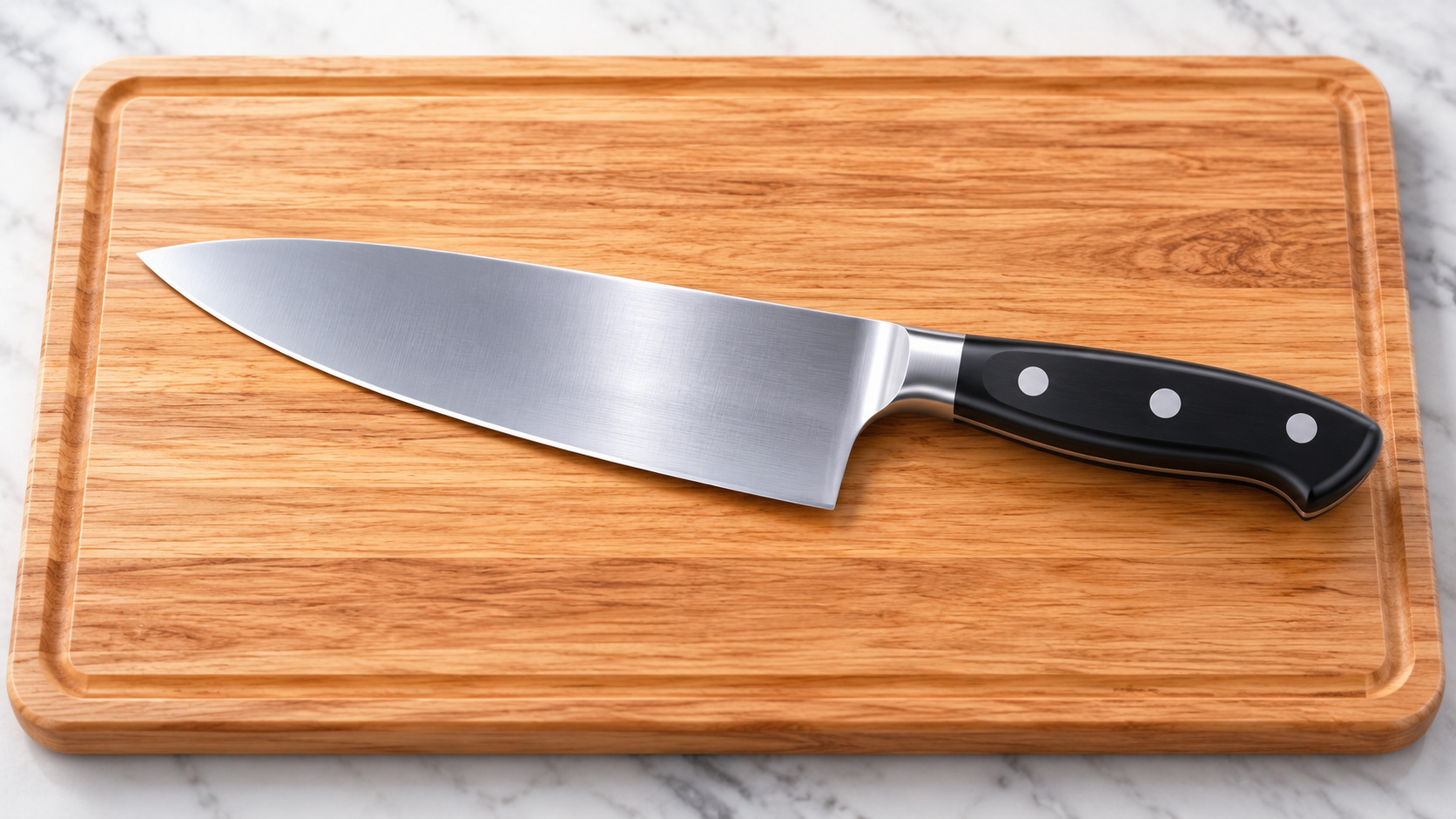
A Japanese knife is only as good as its edge, and unlike pull-through sharpeners or honing rods, a whetstone is the tool most consistently recommended for maintaining the thin, precise bevels that Japanese blades are known for. Where a pull-through sharpener grinds away metal indiscriminately, a whetstone lets you control the exact angle and pressure applied to the edge, preserving the geometry the knife was originally ground to.
This distinction matters more with Japanese knives than with many Western ones. Japanese blades are typically ground to a thinner, more acute edge angle — often somewhere between 12 and 17 degrees per side, compared to the wider 20-degree angles common on many Western chef’s knives. A pull-through sharpener, designed around a fixed, wider angle, can quickly wear away that thin edge geometry and permanently change how the knife performs. A whetstone, used correctly, lets you match the original angle and repeatedly restore the edge without reshaping the blade.
There’s also a practical reason whetstones remain the standard recommendation for anyone who owns more than one or two knives: they’re reusable indefinitely (with occasional flattening), work on virtually any blade profile or steel type, and — unlike sharpening services — let you maintain your knives on your own schedule rather than waiting for a drop-off appointment. The upfront cost of a good stone is also generally lower over time than repeated professional sharpening fees.
This guide compares seven widely available whetstones — spanning true splash-and-go convenience stones to traditional soaking stones — based on published manufacturer specifications and established sharpening characteristics, so you can find the right one for your knife collection and sharpening routine.
For background on the knives themselves, see our guides to the best Japanese chef knives for home cooks and gyuto vs santoku, both of which pair naturally with the stones below.
[Image suggestion: flat-lay of several whetstones in different grits, showing color and texture variation]
How We Selected These Whetstones
Each stone on this list was evaluated against four criteria:
- Grit and cutting speed — how quickly the stone removes metal and refines an edge at its listed grit
- Preparation method — whether the stone is true splash-and-go or requires soaking, and for how long
- Consistency and durability — how evenly the stone wears and how long it holds up under regular use
- Value for beginners and enthusiasts alike — making sure this list includes accessible entry points as well as stones favored by more experienced sharpeners
This list intentionally spans a range of price points and prep styles rather than clustering around one type of stone. Someone sharpening a single santoku a few times a year has very different needs than someone maintaining a growing collection of gyutos and specialty knives, and the right stone for each situation isn’t necessarily the same one. Where possible, this comparison also favors stones with an established track record — brands and models that show up repeatedly across independent knife forums, retailer product pages, and long-term user feedback — over newer or less-documented options.
Quick Comparison Table
| Whetstone | Grit | Prep Method | Best For Beginners | Price Range (US) |
|---|---|---|---|---|
| Shapton Pro 1000 | 1000 | Splash-and-go | Yes | $25–40 |
| Shapton Glass 1000 | 1000 | Splash-and-go | Yes | $55–65 |
| King Deluxe 1000 | 1000 | Soaking (2–5 min) | Yes | $25–35 |
| Naniwa Professional 1000 | 1000 | Light soak | Somewhat | $45–60 |
| Suehiro Cerax 1000 | 1000 | Soaking (10–15 min) | Somewhat | $45–55 |
| King KDS 1000/6000 | 1000 / 6000 | Soaking | Yes | $45–50 |
| Sharp Pebble 1000/6000 | 1000 / 6000 | Soaking (10–15 min) | Yes | $40–60 |
Prices vary by retailer, bundle contents (base, angle guide, nagura stone), and whether the stone is sold individually or as part of a kit.
Top 7 Whetstones for Japanese Knives
1. Shapton Pro 1000
Key Features: The Shapton Pro line is a true splash-and-go ceramic stone, meaning it requires little more than a quick splash of water before use rather than a soak. It’s thicker than Shapton’s Glass line, which some sharpeners find gives it a longer usable lifespan before needing replacement. The Pro line is widely used by both home cooks and professionals looking for a fast, low-maintenance sharpening stone.
Pros:
- No soaking required, ready to use almost immediately
- Thicker profile than the Glass line, generally reported to last longer
- Fast cutting speed at 1000 grit
Cons:
- Less traditional feel compared to soaking stones
- Ceramic composition can produce more slurry mess than glass-backed alternatives
Best For: Sharpeners who want minimal prep time without sacrificing cutting speed
[Amazon Link]
2. Shapton Glass 1000
Key Features: Mounted on a glass backing, the Shapton Glass 1000 is another true splash-and-go stone, known for staying flat longer and drying quickly after use — a practical advantage for anyone sharpening in a kitchen rather than a dedicated workshop. It’s frequently recommended for use on harder steels, including many premium Japanese knife alloys.
Pros:
- Glass backing helps the stone stay flat over repeated use
- Dries quickly, convenient for kitchen storage
- Reported to handle harder steels well without excessive wear
Cons:
- Higher price than most other splash-and-go options on this list
- Thinner profile than the Shapton Pro, with a comparatively shorter lifespan reported by some users
Best For: Sharpeners working with harder steel knives who want a low-maintenance stone
[Amazon Link]
3. King Deluxe 1000
Key Features: One of the most established names in affordable Japanese whetstones, the King Deluxe 1000 is a synthetic soaking stone that requires a short soak — typically two to five minutes — before use. At roughly 207 x 66 x 34mm, it’s a substantial stone for the price, and it’s often cited as the whetstone many sharpeners use to step up from budget pull-through sharpeners for the first time.
Pros:
- Very affordable relative to stone size and quality
- Short soak time compared to other traditional soaking stones
- Long track record of reliable performance across knife types
Cons:
- Requires soaking, unlike splash-and-go alternatives
- Can wear unevenly without periodic flattening
Best For: Beginners looking for a trusted, budget-friendly first whetstone
[Amazon Link]
4. Naniwa Professional 1000
Key Features: Naniwa’s Professional line (formerly sold under the Chosera name) is a ceramic stone that behaves as a near splash-and-go stone for many users, though it benefits from a brief soak or splash depending on conditions and personal preference. It’s widely respected among more experienced sharpeners for its consistent cutting feel and ability to build a fine slurry quickly.
Pros:
- Fast, consistent cutting action
- Builds slurry efficiently for a smoother finish
- Strong reputation among professional and enthusiast sharpeners
Cons:
- Some reports of the stone becoming gummy if oversoaked, requiring users to learn the right prep balance
- Pricier than King Deluxe or Shapton Pro at the same grit
Best For: Enthusiasts who want a professional-grade feel and are willing to learn the stone’s specific prep requirements
[Amazon Link]
5. Suehiro Cerax 1000
Key Features: The Suehiro Cerax 1000 is a soaking stone made from a white alumina abrasive, designed for fast cutting even on abrasion-resistant steels used in premium Japanese knives. It’s frequently described as a direct upgrade from the King Deluxe 1000, offering faster cutting and a smoother slurry at a moderate price increase.
Pros:
- Fast cutting action, including on harder premium steels
- Smooth, even slurry that supports consistent results
- Often includes a small nagura stone for maintaining the stone’s surface
Cons:
- Longer soak time (10–15 minutes) than King Deluxe or the splash-and-go options
- Higher price than King Deluxe for a similar grit range
Best For: Sharpeners who want faster cutting than King Deluxe without moving to a premium splash-and-go stone
[Amazon Link]
6. King KDS 1000/6000 Combination Stone
Key Features: This two-sided King stone combines a 1000-grit sharpening side with a 6000-grit polishing side in a single unit, making it a practical option for sharpeners who don’t want to buy and store two separate stones. Like other King stones, it requires soaking before use.
Pros:
- Two grits in one stone, reducing cost and storage needs
- Reliable King Deluxe performance on the 1000-grit side
- Good entry point for sharpeners who want to both sharpen and polish without buying multiple stones
Cons:
- Combination stones wear at different rates on each side, which can eventually create an uneven stone if not flattened regularly
- Requires soaking like other King stones
Best For: Beginners who want a complete two-grit sharpening setup in a single, affordable stone
[Amazon Link]
7. Sharp Pebble 1000/6000
Key Features: Sharp Pebble’s 1000/6000 combination stone is one of the most widely available beginner sharpening kits, typically bundled with a non-slip bamboo base and an angle guide to help new sharpeners maintain a consistent angle. Like the King KDS combination stone, it requires a 10–15 minute soak before use.
Pros:
- Included angle guide is genuinely useful for sharpeners new to freehand technique
- Widely available with strong retailer support and accessible pricing
- Combination grit covers both sharpening and polishing in one purchase
Cons:
- Not a premium stone — cutting speed and consistency are generally reported as more basic than dedicated Japanese stone brands
- Requires the full soak time before each use
Best For: First-time sharpeners who want a complete, guided starter kit rather than piecing together tools individually
[Amazon Link]
[Image suggestion: sharpening process diagram showing blade angle against a whetstone]
Buying Guide
What Grit Should Beginners Choose?
For most home cooks, a 1000-grit stone is the right starting point. It’s coarse enough to restore a dull edge but fine enough to leave a usable, functional edge without needing a finishing stone afterward. Combination stones like the King KDS or Sharp Pebble, which pair 1000 grit with a finer 6000-grit side, are a practical way to cover both sharpening and polishing without buying multiple stones right away.
Understanding the broader grit range helps put that recommendation in context. Coarser stones in the 200–600 range are generally reserved for repairing chips, fixing a rolled edge, or reshaping a blade that’s been damaged or badly neglected — tasks most home cooks encounter rarely, if ever. The 1000–2000 range is considered the standard working grit for routine sharpening, striking the balance between cutting speed and edge refinement that covers the vast majority of home kitchen needs. Beyond that, 3000–6000 grit stones polish and refine an already-sharp edge rather than reshaping it, producing a smoother, more precise cutting surface. Anything above 8000 grit moves into specialty territory — mirror-polished edges valued more for finish and presentation than for any meaningful improvement in cutting performance for everyday kitchen tasks.
In practice, this means a single 1000-grit stone, used consistently and paired with regular honing between sessions, is genuinely sufficient for most home cooks. Adding a finer finishing stone is a worthwhile upgrade for those who want a more refined edge, but it’s a refinement rather than a requirement.
Splash-and-Go vs. Soaking Stones
Splash-and-go stones, like the Shapton Pro and Shapton Glass, are ready to use within seconds — just a quick splash of water on the surface. This makes them convenient for sharpeners who want to touch up an edge quickly without planning ahead. Soaking stones, like the King Deluxe, Suehiro Cerax, and the combination stones on this list, need to sit in water until air bubbles stop rising from the stone — anywhere from two to fifteen minutes depending on the specific stone. Soaking stones are often considered to have a more traditional feel and, in the case of stones like the Suehiro Cerax, build a slurry that’s specifically valued for the finish it produces. Neither approach is objectively better; the choice mainly comes down to how much prep time you’re willing to spend.
[Image suggestion: stone size comparison, showing a single 1000-grit stone next to a combination 1000/6000 stone]
How Often Should You Sharpen?
For a home cook using a knife daily, a full sharpening session on a 1000-grit stone every few weeks to once a month is a reasonable baseline, supplemented by honing between sharpenings to realign the edge without removing material. Cooks who use their knives less frequently, or who maintain the edge with a honing steel or rod between uses, can often stretch this interval longer. The right frequency ultimately depends on how the knife is used, what it’s cutting, and how the edge feels during regular use — a knife that’s struggling to cleanly slice a tomato is usually a sign it’s time to sharpen.
Stone Size and Base Considerations
Most whetstones for home use fall in a similar size range — roughly 180 to 210mm long and 60 to 75mm wide — which comfortably accommodates the full length of a santoku and most of a gyuto’s edge in a single pass, though longer gyuto blades may require repositioning partway through a stroke. A stable, non-slip base matters as much as the stone itself: stones that shift or rock during sharpening make it much harder to maintain a consistent angle, which is why several combination kits, including the Sharp Pebble and Suehiro Cerax lines, include a dedicated base or holder as standard.
Flattening and Long-Term Maintenance
All whetstones wear unevenly over time, developing a slight dish or groove in the center from repeated use — a natural result of sharpening the same section of blade in the same spot. An uneven stone can throw off your angle consistency and eventually make sharpening less effective, so most manufacturers recommend periodic flattening using a dedicated flattening stone or plate. Combination stones, which see uneven wear between their coarse and fine sides, generally need flattening more frequently than single-grit stones. Building a quick flatness check into your regular sharpening routine — running a straightedge across the stone’s surface — helps catch this before it affects your results.
Frequently Asked Questions
Is 1000 grit enough to fully sharpen a knife?
Yes, for most routine maintenance. A 1000-grit stone restores a functional, sharp edge on its own. Finer stones (3000 grit and above) refine and polish that edge further but aren’t strictly necessary unless you want a more refined finish.
Do Japanese knives need special whetstones?
Not necessarily special stones, but Japanese knives — particularly those made from harder steel — generally benefit from stones designed to cut efficiently on abrasion-resistant alloys, which several of the stones on this list, including the Suehiro Cerax and Shapton Glass, are specifically noted for handling well.
How long do whetstones last?
This varies significantly by stone type, material, and frequency of use. Splash-and-go ceramic stones like Shapton Pro and Glass are generally reported to hold up over years of regular use, while softer soaking stones may wear down faster and require more frequent flattening to stay level.
Which stone is best for beginners?
The King Deluxe 1000 and Sharp Pebble 1000/6000 are both commonly recommended starting points — the King Deluxe for its simplicity and low cost, and the Sharp Pebble for its included angle guide, which helps new sharpeners maintain a consistent angle while learning freehand technique.
Can I use the same whetstone on both Japanese and Western knives?
Yes. Whetstones aren’t specific to knife origin — grit and stone material matter more than the knife brand. A 1000-grit stone will restore an edge on a German chef’s knife just as effectively as on a Japanese gyuto, though the ideal sharpening angle differs between the two styles.
What’s the difference between a whetstone and a honing rod?
A whetstone actually removes small amounts of metal to reshape and sharpen a dull edge, while a honing rod (or steel) simply realigns a rolled or bent edge between sharpenings without removing material. Both play a role in knife maintenance — honing extends the time between full sharpenings, but it can’t restore an edge that’s actually gone dull.
Final Recommendation
Best Overall: Shapton Pro 1000
A strong balance of convenience, cutting speed, and durability, with no soaking required for quick, consistent sharpening sessions.
Best Budget: King Deluxe 1000
A trusted, affordable stone with a short soak time and a long track record among both beginners and experienced sharpeners.
Best Premium: Naniwa Professional 1000
Favored by more experienced sharpeners for its consistent cutting feel and slurry quality, at a price that reflects its professional-grade reputation.
Best All-in-One Kit: Sharp Pebble 1000/6000
For anyone who wants a single purchase that includes the stone, base, and angle guide without sourcing separate accessories, this combination kit covers both sharpening and polishing in one package — a practical choice for a first-time sharpening setup or as a gift for a home cook building out their kitchen tools.
No single stone on this list is a wrong choice — the differences between them come down to prep time, cutting speed, and how much you’re willing to spend for incremental gains in consistency. A well-maintained King Deluxe 1000, used correctly and flattened regularly, will keep a Japanese knife just as functional as a premium splash-and-go stone; the higher-end options mainly offer convenience and a more refined feel rather than a fundamentally different result for most home cooking needs.
This article compares grit, preparation method, and pricing across popular whetstone brands based on publicly available manufacturer and retailer specifications. Individual sharpening results can vary based on technique, knife steel, and stone maintenance.
Comment