The Pilot Custom 74 and Platinum #3776 Century are two of the most commonly recommended first gold-nib fountain pens from Japan, and they sit in almost exactly the same price bracket, targeting the same buyer: someone ready to move beyond a steel-nib starter pen. That overlap is exactly why they get compared so often — but their design priorities diverge in ways that matter more than a simple smoothness contest.
Both pens come from manufacturers with over a century of fountain pen production, and both represent each company’s approach to the same basic question: what should a buyer’s first “real” gold-nib pen offer them? Pilot’s answer, reflected in the Custom 74, is choice — eleven nib options spanning precise, expressive, and specialty grinds. Platinum’s answer, reflected in the #3776 Century, is reliability between uses — a cap mechanism specifically engineered to solve the most common frustration new fountain pen owners report, a dried-out nib after weeks of not writing. Understanding that difference in philosophy matters more to a buying decision than any single spec on a comparison chart.
This comparison is based on official Pilot and Platinum specifications and widely documented product characteristics rather than first-hand testing, and it focuses on the practical differences that should actually inform a purchase decision.
Custom 74 vs #3776 Century at a Glance
| Category | Better Fit |
|---|---|
| Nib selection | Pilot Custom 74 |
| Infrequent use | Platinum #3776 Century |
| Cap sealing / ink preservation | Platinum #3776 Century |
| Everyday versatility | Pilot Custom 74 |
| Fine-writing choice | Depends on preferred nib |
| First premium fountain pen | Depends on priorities |
| Cartridge/converter use | Both |
| Overall | Depends on priorities |
Pilot Custom 74 Overview
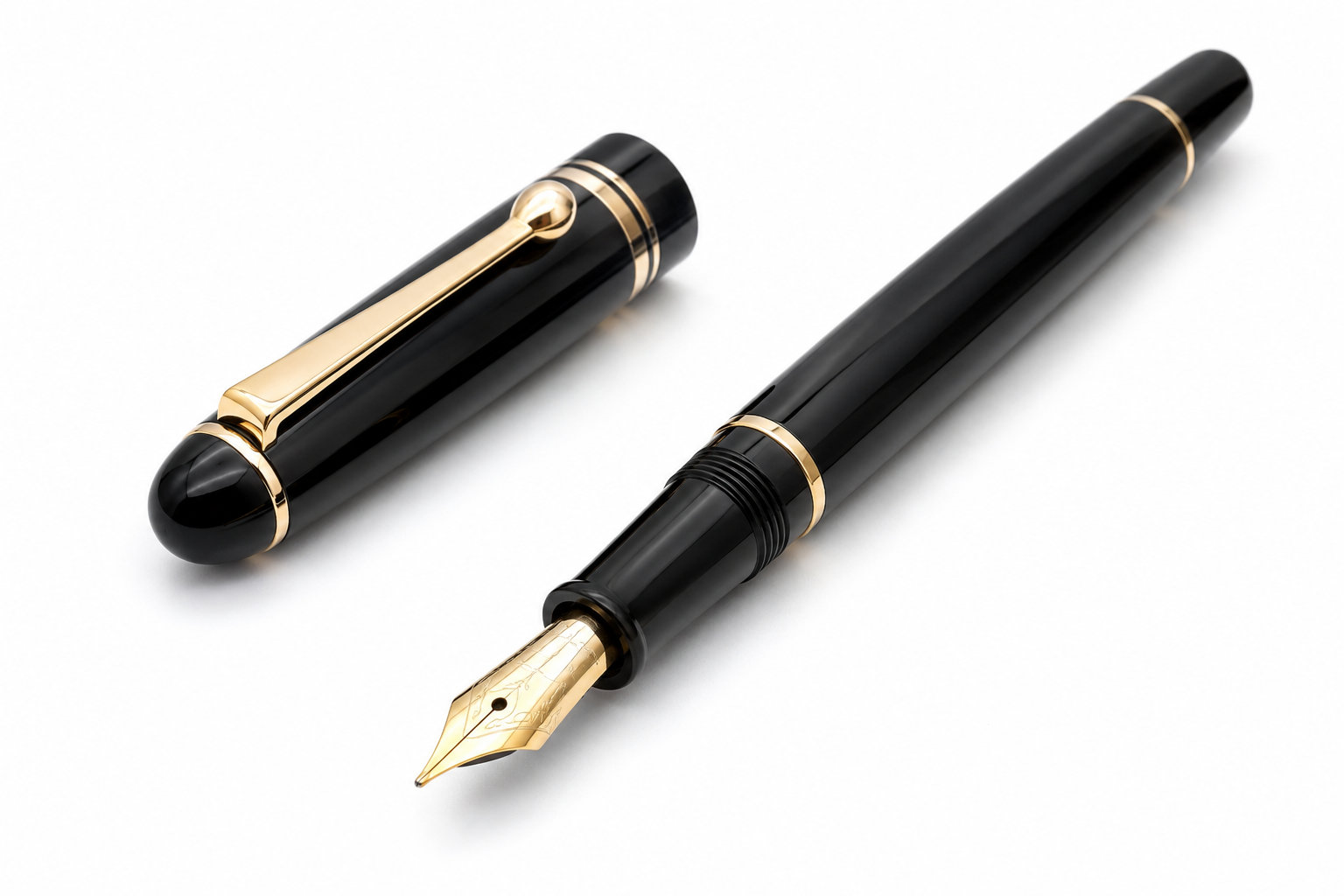
Pilot’s official specifications list the Custom 74 with a 14K No.5 nib available in 11 nib options, spanning everything from Extra Fine through Broad and specialty grinds like Falcon and Music nibs. The pen measures 143mm in length, with a maximum diameter of 14.7mm, and weighs 17.4 grams. It uses a resin barrel and cap with a screw-on cap mechanism, and is compatible with Pilot’s CON-40 and CON-70N converters for use with bottled ink, alongside standard Pilot ink cartridges.
Platinum #3776 Century Overview
The standard #3776 Century uses a 14K gold nib, commonly offered in Extra Fine, Fine, Medium, and Broad widths, with some color lines extending to a broader range including Ultra Extra Fine, Soft Fine, Soft Medium, Coarse, and Music nibs. Published dimensions for the standard model list a capped length of approximately 139.7mm and a weight in the range of 20–20.5 grams, with a resin body and metal (gold or rhodium-plated) trim depending on color. It uses a cartridge/converter filling system compatible with Platinum’s proprietary cartridges and converter. The pen’s defining feature is its Slip & Seal cap mechanism, which Platinum documents as capable of preventing the nib from drying out for up to 24 months of non-use. Exact dimensions, included accessories (some retailers note the converter is sold separately depending on the specific listing), and nib range can vary slightly by color and region, so these figures should be confirmed against the specific model and retailer before purchase.
Nib Selection — The Custom 74’s Biggest Advantage
This is where Pilot’s lineup clearly outpaces Platinum’s standard offering. Pilot documents 11 nib options for the Custom 74, giving buyers a wide range to match their handwriting size, pressure, and stylistic preference — from precise Extra Fine nibs suited to small handwriting, to expressive options like the Falcon (soft, flexible) nib for line variation, and even a specialty Music nib for calligraphic or musical notation use. For a buyer who already has a strong sense of what nib style suits them, or who wants room to explore different nib characters within one pen line, the Custom 74’s range gives more starting points than the #3776 Century’s narrower standard offering.
Slip & Seal — The #3776 Century’s Biggest Advantage
Platinum’s Slip & Seal mechanism addresses a specific, well-known fountain pen frustration: ink drying out in the nib and feed after a pen sits unused for weeks or months. Platinum documents this mechanism as maintaining ink readiness for as long as 24 months without use, achieved through an inner cap and spring system that creates a tight seal against the grip section when the cap is screwed closed. This matters most for a specific kind of owner — someone who rotates between several pens, keeps a pen at a desk for occasional signatures, or simply doesn’t write with a fountain pen every single day. For that use case, Slip & Seal solves a real, documented problem that the Custom 74’s more conventional cap doesn’t specifically engineer around.
Writing Character — Smoothness vs. Feedback
Based on documented nib characteristics and published positioning rather than firsthand comparison, these two pens are frequently described in different terms by reviewers and retailers. The #3776 Century’s nib is commonly described as offering more tactile feedback — a slight, controlled resistance against the page sometimes compared to the sensation of writing on fine parchment — while the Custom 74’s nib is more frequently described as smoother and softer in feel. It’s worth being clear that feedback isn’t inherently a flaw; many fountain pen users specifically prefer a nib that offers some sensation of contact with the page over one that feels entirely frictionless, while others prefer the opposite. This is a matter of documented general reputation rather than a measurable, universally agreed-upon ranking, and individual nib units can vary even within the same model.
This distinction matters more than it might initially seem, because “smoother” and “better” aren’t the same thing for every writer. Someone accustomed to a fine-tipped gel pen or a very soft ballpoint may find a smoother nib feels more familiar and easier to adjust to. Someone who values a stronger sense of connection between the pen and the page — a trait often prized in calligraphy or detailed handwriting — may actually prefer the #3776 Century’s documented feedback over a softer, glassier nib. Neither preference is more valid than the other, which is exactly why this comparison avoids declaring either nib objectively superior.
Size and Weight
| Measurement | Pilot Custom 74 | Platinum #3776 Century |
|---|---|---|
| Length (capped) | 143mm | ~139.7mm |
| Maximum diameter | 14.7mm | Varies by source, roughly 15mm |
| Weight | 17.4g | ~20–20.5g |
The Custom 74 is documented as noticeably lighter than the #3776 Century, a difference of roughly 3 grams that may matter more over long writing sessions than it might seem on paper. Neither pen is heavy by fountain pen standards, and both are generally described as comfortable for extended use, but a buyer specifically sensitive to pen weight may find the Custom 74’s lighter build preferable, while others may prefer the #3776 Century’s slightly more substantial feel in hand.
Filling Systems and Ink
Both pens use a cartridge/converter system rather than an integrated filling mechanism, giving owners the flexibility to use proprietary cartridges for convenience or a converter to draw ink from any bottled ink. The Custom 74 uses Pilot’s CON-40 or CON-70N converters and standard Pilot cartridges; the #3776 Century uses Platinum’s proprietary cartridge and converter system. Neither system is inherently better — both are widely available and well-established — though it’s worth noting that committing to either pen also means committing to that manufacturer’s specific cartridge and converter ecosystem, since the two aren’t cross-compatible.
Which Is Better for Daily Writing?
For someone who writes with a fountain pen daily or near-daily, the Custom 74’s broader nib selection and lighter weight make it easier to fine-tune to a specific handwriting style and comfortable for sustained use. Someone entering Pilot’s Custom ecosystem specifically — with an eye toward exploring other Custom-series pens later — also gains some familiarity value from starting here. For someone whose writing is more occasional or who values the pen staying immediately ready regardless of gaps between uses, the #3776 Century’s Slip & Seal offers a genuine practical advantage that daily writers are less likely to need as much.
Which Is Better as Your First Gold-Nib Fountain Pen?
Neither pen is the definitively “correct” first choice — the better fit depends on what you’re optimizing for. If nib selection and the ability to try different writing characters within one product line matters most, the Custom 74’s 11-option lineup gives more room to explore. If you’re drawn specifically to Platinum’s design philosophy and the practical reassurance of a pen that resists drying out between uses — a genuine concern for anyone newer to fountain pens who might not yet have built a daily writing habit — the #3776 Century’s Slip & Seal offers a meaningful safety net while you’re still developing that habit.
Price and Value
Both pens sit in a similar price bracket, generally in the range most retailers list for entry-level gold-nib Japanese fountain pens, though current prices vary by color, nib size, seller, and region. Limited editions, specialty nibs (such as the #3776 Century’s Music nib or Kanazawa-Haku collection), and regional pricing differences can shift the comparison meaningfully, so it’s worth checking current listings for the specific configuration you’re considering rather than assuming a fixed price gap between the two lines.
Value, in this comparison, isn’t simply about which pen costs less at a given moment — it’s about which pen’s specific strengths align with how you’ll actually use it. A Custom 74 bought for its nib variety delivers strong value to a frequent writer who appreciates having options; the same pen offers less distinctive value to someone who mainly wants a desk pen they pick up occasionally. The reverse is true for the #3776 Century: its Slip & Seal mechanism delivers real, ongoing value to an infrequent writer, but adds little practical benefit for someone who already writes with a fountain pen daily and rarely lets ink sit unused.
These Pens Solve Different Ownership Problems
The Custom 74 gives buyers more ways to choose how the pen writes. The #3776 Century gives buyers a distinctive solution to how the pen behaves when it is not being used.
That distinction is the most useful lens for this comparison. Both are excellent, well-regarded entry points into 14K gold-nib fountain pens from established Japanese manufacturers, and the “better” pen genuinely depends on which of those two problems — nib variety or ink readiness between uses — matters more for how you actually plan to use it.
Choose the Pilot Custom 74 If…
- You want extensive nib choice, including specialty grinds like Falcon or Music
- You write frequently and want a nib matched precisely to your style
- You want a lighter standard-weight fountain pen
- You’re entering Pilot’s Custom ecosystem and may explore other Custom-series pens later
- You already have a good sense of which nib style suits your handwriting
Choose the Platinum #3776 Century If…
- You rotate between several fountain pens and don’t write with any one daily
- You may leave the pen unused for weeks or months at a time
- Slip & Seal’s documented ink-drying prevention matters to your use case
- You prefer Platinum’s design philosophy and slightly more substantial feel
- You prioritize ink preservation and readiness over an extensive nib lineup
Frequently Asked Questions
Is the Pilot Custom 74 better than the Platinum #3776 Century?
Neither is universally better — the Custom 74 offers a wider nib selection and lighter weight, while the #3776 Century offers Slip & Seal’s documented ink-preservation benefit. The better choice depends on whether nib variety or ink readiness between uses matters more to you.
Which has more nib options?
The Pilot Custom 74, with 11 documented nib options compared to the #3776 Century’s standard four (Extra Fine, Fine, Medium, Broad), though some #3776 Century color lines extend to a broader range including specialty and Music nibs.
Which is better for beginners?
Both are commonly recommended as first gold-nib fountain pens. The Custom 74 suits beginners who want to explore different nib styles, while the #3776 Century suits beginners who may not yet write daily and want a pen that stays ready between uses.
Which is better for fine writing?
Both offer fine nib options — the Custom 74 through its Extra Fine and similar grinds, and the #3776 Century through its Extra Fine or Ultra Extra Fine options depending on color line. The better fit depends on which manufacturer’s fine nib character you prefer, which is difficult to determine without trying both.
Which fountain pen is better if you do not write every day?
The Platinum #3776 Century, thanks to its documented Slip & Seal mechanism, which Platinum states can prevent ink from drying out for up to 24 months of non-use — a meaningful advantage for infrequent writers or anyone rotating between multiple pens.
What is Platinum Slip & Seal?
Slip & Seal is Platinum’s patented inner-cap mechanism, built into a screw-type cap, that creates an airtight seal against the pen’s grip section when closed. Platinum documents this as preventing the ink from drying out in the nib and feed for extended periods of non-use.
Does the Custom 74 use a converter?
Yes. The Custom 74 is compatible with Pilot’s CON-40 and CON-70N converters for use with bottled ink, in addition to standard Pilot ink cartridges.
Are both pens Japanese?
Yes. The Pilot Custom 74 is manufactured by Pilot, and the Platinum #3776 Century is manufactured by Platinum, both long-established Japanese fountain pen makers; the #3776 Century’s packaging and cap ring are documented as marked “Made in Japan.”
Can I switch nibs on either pen after purchase?
Both pens use interchangeable nib units in principle, though availability of individual replacement or swap nibs varies by retailer and region, and neither manufacturer positions nib-swapping as a routine, casually available option the way some hobbyist pen brands do. If nib flexibility matters to you, it’s generally more practical to choose the specific nib width you want at purchase rather than planning to swap later.
Do these pens come with a warranty?
Both Pilot and Platinum offer manufacturer warranties on their standard-production fountain pens, though specific terms and coverage periods vary by region and retailer. It’s worth checking the warranty terms offered by your specific seller, since authorized retailers may provide different coverage than third-party marketplace listings.
This article is an independent, research-based comparison. Specifications and claims are drawn from official Pilot and Platinum documentation and widely cited retailer specifications rather than first-hand testing; where a claim describes subjective writing feel or feedback, it reflects documented general reputation rather than firsthand or measured comparison.
For more on Japanese fountain pens and related gift guides, see our guides to best Japanese fountain pens, best luxury Japanese fountain pens, best Japanese pens, best Japanese pens as luxury gifts, best Japanese pens for gifts, and best premium Japanese gifts.