Japanese pens don’t need a premium price tag to deliver on the reputation the category is known for. Under $20, you can find genuinely well-engineered ballpoints, gel pens, an entry-level fountain pen, and even a mechanical pencil built around real innovation rather than just a low price point. The trick is knowing which product in each category actually earns its recommendation, since “affordable” and “worth buying” aren’t always the same thing.
This price range also happens to be where Japanese stationery brands are arguably strongest relative to their competition. Where many international pen brands treat anything under $10 as disposable, low-effort merchandise, companies like Pilot, Uni, and Platinum apply the same engineering care to their budget lines as they do to pricier models — a genuine mechanical innovation like the Kuru Toga’s rotating lead, or a slip-and-seal cap on a $5 fountain pen, isn’t watered down just because the price is low.
This guide compares nine Japanese pens that are typically available for around or under $20, organized by type and use case, based on published manufacturer specifications and established product characteristics. Prices vary by retailer, configuration, and region, so figures throughout this guide should be read as general tiers rather than fixed amounts.
Quick Picks
- Best Overall: Uni Jetstream
- Best Gel Pen: Pentel EnerGel
- Best Premium Feel: Zebra Sarasa Grand
- Best Ballpoint: Pilot Acroball
- Best Fountain Pen: Pilot Kakuno
- Best Ultra-Budget Fountain Pen: Platinum Preppy
- Best Mechanical Pencil: Uni Kuru Toga
Comparison Table
| Product | Type | Best For | Typical Price Tier | Refillable | Main Strength |
|---|---|---|---|---|---|
| Uni Jetstream | Ballpoint | Everyday reliability | Under $5 | Yes | Smooth, fast-drying ink |
| Zebra Sarasa Grand | Gel | Premium feel | $10–20 | Yes | Metal body, polished appearance |
| Pentel EnerGel | Liquid gel | Smooth writing | Under $5 | Yes | Fast-drying, consistent line |
| Pilot Acroball | Ballpoint | Fast writing | Under $5 | Yes | Low-viscosity hybrid ink |
| Uni-ball One | Gel | Minimalist daily use | Under $5 | Yes | Dark, high-contrast ink |
| Pilot Dr. Grip | Ballpoint | Long writing sessions | $10–20 | Yes | Ergonomic double-layer grip |
| Pilot Kakuno | Fountain pen | Fountain pen beginners | $15–20 | Yes | Forgiving steel nib |
| Platinum Preppy | Fountain pen | Lowest-cost fountain pen | Under $10 | Cartridge-based | Slip-and-seal cap prevents dry-out |
| Uni Kuru Toga | Mechanical pencil | Consistent lines | $5–10 | Yes | Auto-rotating lead mechanism |
What Can You Actually Get for $20?
Under $5 covers basic gel pens and ballpoints, including genuinely capable options like the Platinum Preppy, which packs a slip-and-seal cap mechanism more commonly found on pricier pens into one of the cheapest fountain pens available.
$5–10 opens up higher-quality gel and ballpoint options, along with entry-level mechanical pencils like the Kuru Toga, whose rotating-lead mechanism is a genuine engineering feature rather than just a price bump over a basic pencil.
$10–20 is where metal-bodied pens start to appear — sometimes referred to as “executive pens,” since they retain the same reliable ink formulas as their cheaper plastic counterparts while adding a heavier, more polished body. The Zebra Sarasa Grand and Pilot Dr. Grip both fall into this tier, offering a noticeably more premium feel without crossing into genuinely premium pricing.
Best Japanese Pens Under $20
Uni Jetstream — Best Overall
Best for: Everyday writing, documents, and general reliability
Why we picked it: The Jetstream’s low-viscosity ink is widely regarded as one of the smoothest ballpoint formulas available, and it remains one of the most consistently recommended Japanese pens regardless of budget — it isn’t a “good for the price” pick, it’s simply a strong pen that also happens to be inexpensive.
Key strengths:
- Fast-drying, smudge-resistant ink
- Smooth, low-resistance writing feel
- Widely available refills
Potential drawbacks: The standard plastic body is functional but plain.
Who should buy it: Anyone who wants one dependable pen for daily writing without thinking too hard about it.
Zebra Sarasa Grand — Best Premium-Feeling Pen Under $20
Best for: A gift-worthy or desk-worthy pen that still fits a tight budget
Why we picked it: The Sarasa Grand’s weighted metal body gives it a noticeably more substantial feel than typical plastic gel pens, making it one of the best examples of the “executive pen” tier — genuine gel ink performance in a body that reads as considerably more expensive than it is.
Key strengths:
- Metal (brass or aluminum) body offers real heft
- Rapid Dry Ink reduces smudging
- Available in multiple tip sizes and finishes
Potential drawbacks: Sits at the top of this price range, so it’s the least “impulse buy” option on this list.
Who should buy it: Anyone who wants a pen that looks and feels more expensive than it costs.
Pentel EnerGel — Best for Smooth Writing
Best for: Long-form notes with minimal smudging
Why we picked it: EnerGel’s liquid gel ink combines the fast-drying properties of a ballpoint with a smoother, more consistent line, making it a strong pick for anyone who writes in longer stretches.
Key strengths:
- Fast-drying liquid gel ink
- Consistent, smooth line quality
- Broad refill ecosystem, including needle-tip versions
Potential drawbacks: The liquid gel formula feels distinct from both standard ballpoint and pigment gel ink.
Who should buy it: Writers who want gel-like smoothness without the longer dry time some pigment gels have.
Pilot Acroball — Best Ballpoint
Best for: Fast, high-volume daily writing
Why we picked it: Acroball’s hybrid ink is engineered for minimal resistance, making it a practical choice for quick, legible writing at speed, backed by a durable tungsten carbide tip.
Key strengths:
- Smooth, low-viscosity hybrid ink
- Durable tip resists wear over time
- Textured grip for stable control
Potential drawbacks: Plain design compared to metal-bodied options on this list.
Who should buy it: Anyone who writes quickly and often — notes, forms, quick messages.
Uni-ball One — Best Minimalist Pen
Best for: Lightweight daily carry without extra bulk
Why we picked it: The Uni-ball One delivers notably dark, high-contrast ink in a simple, understated barrel — a practical, no-frills option for anyone who prioritizes legibility over appearance.
Key strengths:
- Especially dark, legible black ink
- Lightweight, easy to carry
- Smooth writing feel
Potential drawbacks: Narrower color range than more design-focused competitors.
Who should buy it: Anyone who wants reliable performance in the simplest possible package.
Pilot Dr. Grip — Best for Long Writing Sessions
Best for: Extended writing without hand fatigue
Why we picked it: The Dr. Grip’s double-layered rubber grip was specifically engineered to reduce hand fatigue, with a design that’s earned an Ease-of-Use Commendation from the Arthritis Foundation — a genuine ergonomic feature, not just marketing language.
Key strengths:
- Ergonomic grip designed to reduce fatigue
- Well-balanced weight for extended sessions
- Refillable, extending usable life
Potential drawbacks: Bulkier barrel than slimmer everyday pens.
Who should buy it: Anyone who writes for long, uninterrupted stretches — students, note-takers, writers.
Pilot Kakuno — Best Affordable Fountain Pen
Best for: A genuine first fountain pen experience without financial risk
Why we picked it: The Kakuno pairs a forgiving steel nib with a lightweight body and a small smiling-face detail on the nib that helps new users learn proper pen orientation — a thoughtful design choice for a genuinely beginner-focused fountain pen.
Key strengths:
- Forgiving steel nib suited to first-time fountain pen users
- Nib orientation detail helps build proper technique
- Compatible with standard Pilot converters for bottled ink
Potential drawbacks: The playful design may feel less appropriate for formal or professional settings.
Who should buy it: Anyone curious about fountain pens who wants a low-risk way to try one.
Platinum Preppy — Best Budget Fountain Pen
Best for: The lowest-cost way to try a fountain pen
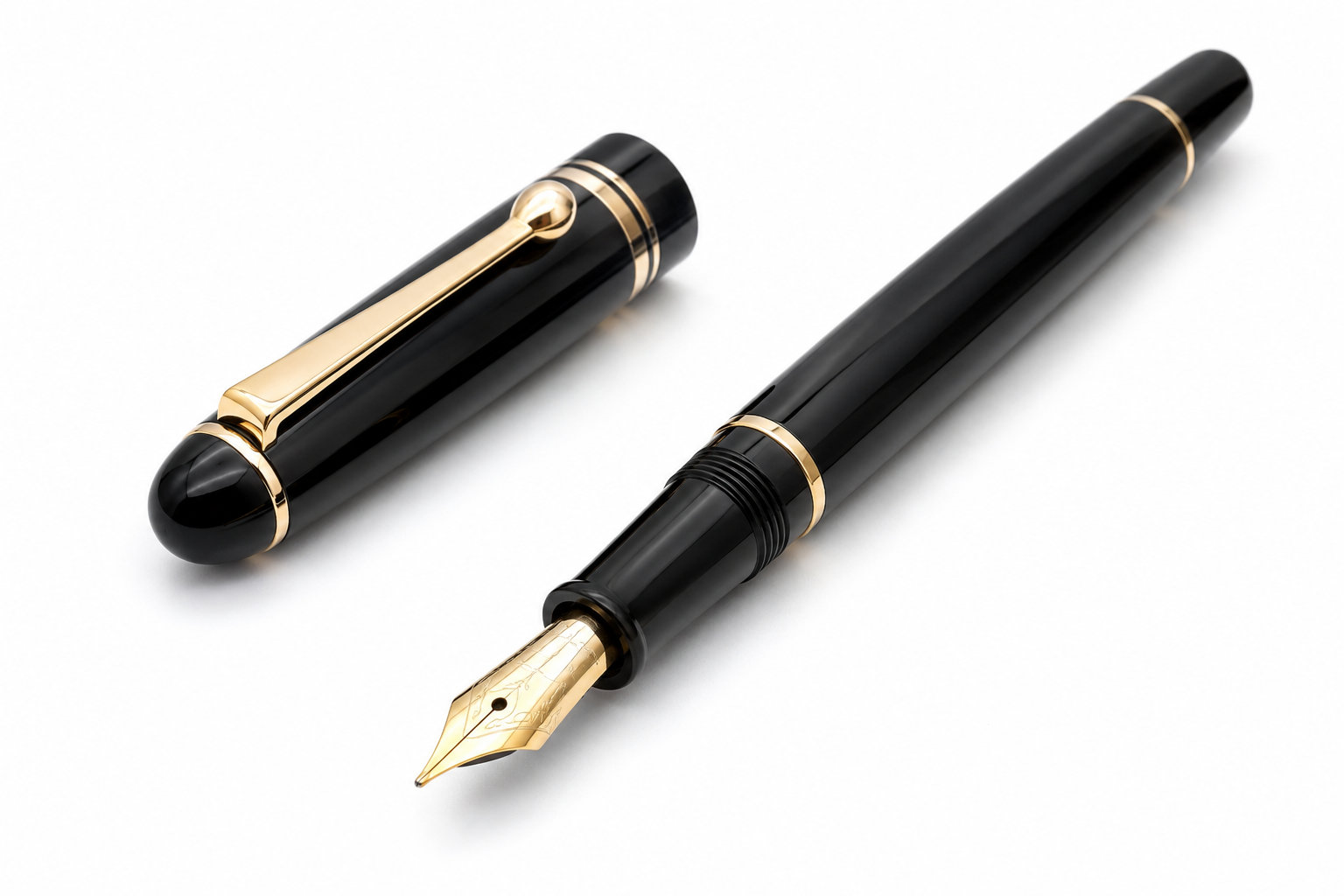
Why we picked it: The Preppy is frequently cited as one of the best values in fountain pens at any price, thanks to its slip-and-seal cap — a feature that helps prevent the nib from drying out and is normally reserved for pricier pens like Platinum’s own 3776 Century.
Key strengths:
- Slip-and-seal cap reduces ink dry-out, unusual at this price
- Available in a wide range of nib sizes and colors
- Low enough cost to buy several for testing inks
Potential drawbacks: Plastic body feels less substantial than metal-bodied alternatives.
Who should buy it: Absolute beginners, or anyone who wants a dedicated pen for testing new inks.
Uni Kuru Toga — Best Mechanical Pencil Option
Best for: Consistently sharp lines without manual sharpening
Why we picked it: The Kuru Toga’s rotation mechanism turns the lead slightly with each stroke, keeping the point evenly worn and avoiding the lopsided, thickening lines that standard mechanical pencils develop over time — a genuine mechanical innovation, not just a marketing claim.
Key strengths:
- Maintains a consistently sharp point automatically
- No manual sharpening required
- Widely available and affordable for the technology it offers
Potential drawbacks: Basic model lacks a lead grade indicator or jam-clearing tool.
Who should buy it: Students and anyone doing high-volume note-taking with standard lead.
Best Japanese Pens Under $20 by Use
| Use | Pick |
|---|---|
| Everyday writing | Uni Jetstream |
| Work | Zebra Sarasa Grand |
| Fast notes | Pilot Acroball |
| Long writing | Pilot Dr. Grip |
| Students | Uni Kuru Toga |
| Fountain pen beginner | Pilot Kakuno |
| Lowest-cost fountain pen | Platinum Preppy |
How to Choose a Japanese Pen Under $20
Ink Type
Ballpoints (Jetstream, Acroball) offer the most reliable balance of smoothness and dry time. Gel pens (Sarasa Grand, Uni-ball One, EnerGel) generally write more smoothly but vary in dry time. Fountain pens (Kakuno, Preppy) offer the most distinctive writing experience but require more care.
Refill Cost
The sticker price is only part of the equation — factor in how much replacement ink or cartridges cost over time, particularly for fountain pens, where cartridge or bottled ink costs can add up for frequent writers.
Comfort
For students or anyone writing for extended periods, an ergonomic option like the Dr. Grip is worth the modest price premium over a standard slim barrel.
Durability
At the higher end of this price range, body material matters more. Metal-bodied options like the Sarasa Grand generally hold up better to daily wear than plastic alternatives.
Fountain Pen Maintenance
Even an affordable fountain pen requires more upkeep than a ballpoint or gel pen — periodic cleaning, careful ink handling, and more caution if it’s left uncapped or unused for a while.
Availability
Before buying a fountain pen specifically, check that cartridges or compatible converters are easy to find in your region, since ongoing availability matters more than the upfront price for a pen you plan to keep using.
Frequently Asked Questions
What is the best Japanese pen under $20?
The Uni Jetstream is the safest overall pick, offering smooth, reliable ink that holds up well regardless of budget — it’s a strong pen first, and an affordable one second.
Are Japanese pens worth buying?
Yes, particularly at this price range, where Japanese brands consistently outperform generic alternatives in ink smoothness, refill quality, and build consistency without requiring a premium budget.
What is the best Japanese fountain pen under $20?
The Pilot Kakuno and Platinum Preppy are the two most commonly recommended options, with the Kakuno offering a more refined beginner nib and the Preppy offering the lowest possible entry cost.
Is Uni Jetstream worth the price?
Yes. Despite its low cost, the Jetstream is widely regarded as a benchmark pen in its own right, not just a budget alternative to pricier options.
What Japanese pen is best for students?
The Uni Kuru Toga is a strong pick for students, thanks to its rotating-lead mechanism that keeps lines consistently sharp through a full day of note-taking.
Can you get a good fountain pen for under $20?
Yes. Both the Pilot Kakuno and Platinum Preppy deliver a genuine fountain pen writing experience — including features like slip-and-seal caps and forgiving steel nibs — well within this budget.
Do cheaper Japanese pens sacrifice quality compared to pricier ones?
Not as much as you might expect. Many of the mechanical innovations found in Japanese pens — smooth low-viscosity inks, rotating lead mechanisms, cap-sealing technology — appear across a brand’s full lineup rather than being reserved exclusively for premium models. What you generally gain at higher price points is body material, finish, and refinement rather than a fundamentally different writing mechanism.
Should I buy several budget pens or save up for one premium pen?
It depends on what you’re optimizing for. Buying two or three pens from this list lets you cover different needs — a Jetstream for daily writing, a Kakuno for trying fountain pens — at a combined cost still well under many single premium pens. If you already know you want one specific writing experience, like a gold-nib fountain pen, saving up for that instead may be the better use of the same budget.
This article is an independent, research-based buying guide. Recommendations are based on published manufacturer specifications and established product characteristics rather than first-hand testing. Prices vary by retailer, seller, pack size, color, nib size, and region — figures here reflect general tiers rather than fixed amounts.
For more detailed comparisons, see our guides to best Japanese pens, best Japanese ballpoint pens, best Japanese gel pens, best Japanese mechanical pencils, best Japanese fountain pens, best pens for students, best Japanese pens for work, and our Pilot vs Uni vs Zebra brand comparison.