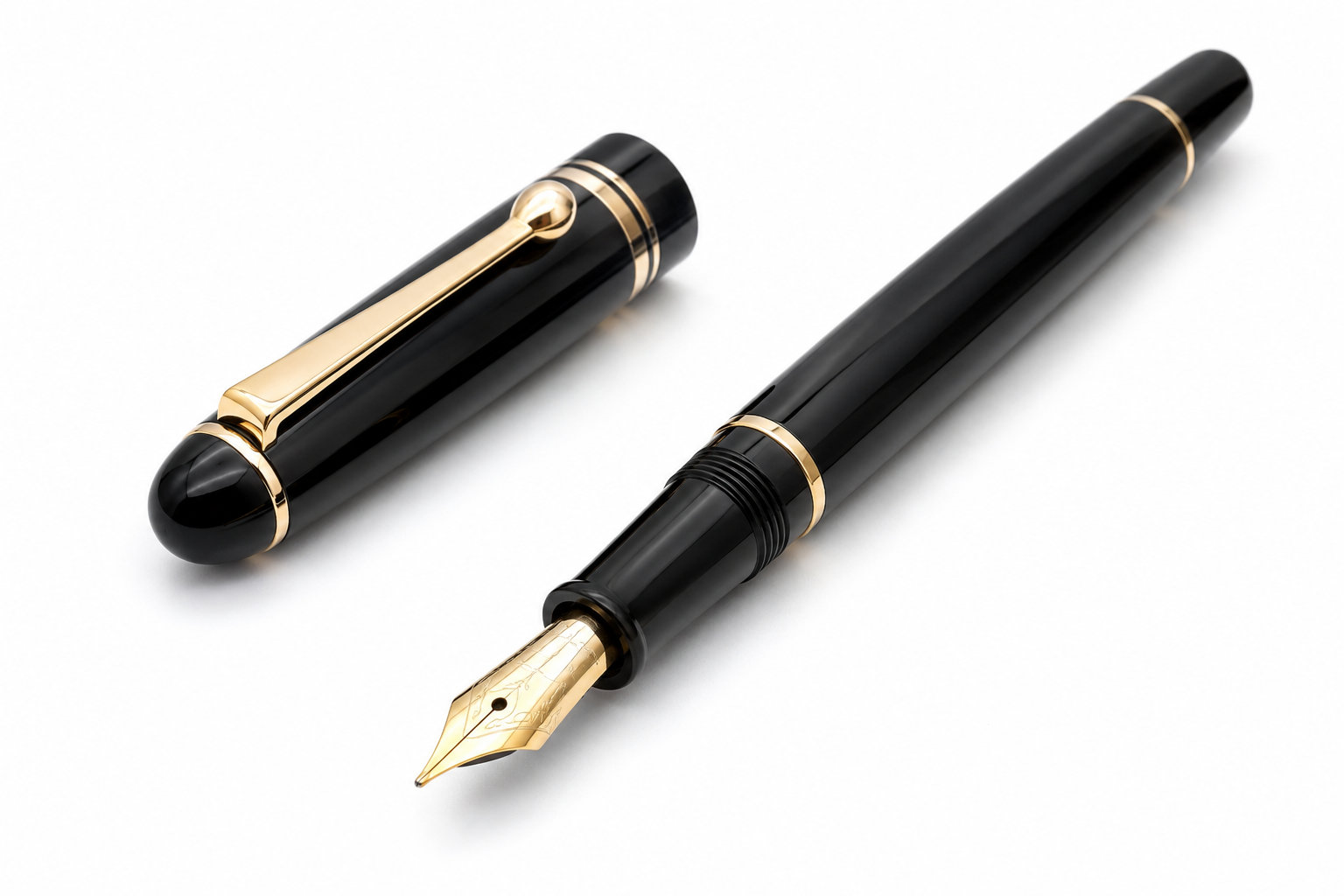
Left-handed writing creates a specific, recurring problem most pens aren’t designed around: the hand naturally drags across freshly written lines, turning slow-drying ink into smudged pages and ink-stained hands. Japanese pen brands have invested heavily in fast-drying ink formulas for reasons that go beyond left-handed writing specifically — smudge resistance benefits quick note-taking and document handling generally — but the result is a category unusually well-suited to left-handed writers as a byproduct of that broader engineering focus.
It’s worth noting upfront that left-handed writers aren’t a single uniform group. Hand position varies significantly — some writers hook their wrist above the line to avoid dragging through fresh ink, others angle the paper instead, and others write with enough of a delay between letters that drying speed matters less than it would for a faster writer. This guide focuses on ink technology and pen design that address the underlying causes of smudging directly, so you can weigh which specific advantage — dry time, grip comfort, or ink smoothness — matters most for your particular writing style.
This isn’t a guide to pens designed exclusively for left-handed use — very few pens are. Instead, it compares seven widely available Japanese pens based on published manufacturer specifications and documented drying-time technology, focused on which ones minimize the specific problems left-handed writers run into most: smudging, ink transfer, and reduced control from pushing rather than pulling the pen across the page.
Quick Picks
- Best Overall: Zebra Sarasa Dry
- Best Gel Pen: Pentel EnerGel
- Best Ballpoint: Uni Jetstream
- Best for Fast Notes: Pilot Acroball
- Best for Long Writing: Pilot Dr. Grip
- Best Everyday Gel: Zebra Sarasa Clip
- Best Minimalist: Uni-ball One
Comparison Table
| Pen | Type | Drying Speed | Best For | Comfort | Main Advantage |
|---|---|---|---|---|---|
| Zebra Sarasa Dry | Gel | Very Fast | Fast note-taking, smudge prevention | Standard rubber grip | DRYJELL ink, third-party tested for rapid dry time |
| Pentel EnerGel | Liquid gel | Fast | Smooth long-form writing | Cushioned grip | Liquid gel formula dries quickly while staying smooth |
| Uni Jetstream | Ballpoint | Fast | Documents, office forms | Standard | Low-viscosity ink dries quickly, smooth glide |
| Pilot Acroball | Ballpoint | Fast | Quick, high-volume writing | Textured grip | Hybrid ink balances speed and smoothness |
| Pilot Dr. Grip | Ballpoint | Fast (standard ink) | Extended writing sessions | Ergonomic double-layer grip | Reduces hand fatigue during long sessions |
| Zebra Sarasa Clip | Gel | Moderate | Everyday writing, color variety | Standard | Water-based pigment ink resists smudging once dry |
| Uni-ball One | Gel | Moderate | Minimalist daily carry | Lightweight | Dark, high-contrast ink; lightweight barrel |
Drying speed classifications above are editorial groupings based on manufacturer claims and documented ink technology (DRYJELL, liquid gel formulas, low-viscosity ballpoint ink) rather than independent lab measurement — we’ve noted the basis for each classification within the product sections below.
What Matters Most for Left-Handed Writers?
Drying time is the most obvious factor, but it isn’t the only one. A pen with genuinely fast-drying ink, like the Zebra Sarasa Dry, directly addresses the smudging problem most left-handed writers experience. That said, “fast-drying” isn’t a single universal solution — the right pen also depends on several other factors working together.
Ink type matters alongside drying time. Liquid gel formulas (EnerGel) and low-viscosity ballpoint ink (Jetstream, Acroball) are generally engineered for faster drying than traditional pigment gel ink (Sarasa Clip, Uni-ball One), though the latter can still perform reasonably well for writers with a lighter touch or who write at a slight angle away from fresh ink.
Tip smoothness affects how much pressure is needed to get consistent ink flow — a scratchier tip often leads to writers pressing harder, which can worsen smudging by putting down more ink per stroke.
Writing pressure varies significantly between individuals, left-handed or not, and heavier-handed writers may see more smudging even with a fast-drying pen simply because more ink is being deposited on the page.
Grip comfort matters more for left-handed writers specifically because the “hook” or “underwriter” hand positions some lefties use to avoid smudging can add strain over long writing sessions — a pen with a dedicated ergonomic grip, like the Dr. Grip, can meaningfully offset that.
Paper compatibility also plays a role: absorbent, lower-quality paper generally causes ink to dry more slowly on the surface and increases feathering, which can compound smudging regardless of which pen is used.
It’s worth being clear that fast-drying ink isn’t automatically “best” for every left-handed writer — someone with a light touch and a hand position that doesn’t drag across fresh ink may get equally good results from a standard pigment gel pen, while someone who writes with more pressure and a hooked grip will see more benefit from prioritizing drying speed specifically.
The 7 Best Japanese Pens for Left-Handed Writers
1. Zebra Sarasa Dry — Best Overall
Best for: Writers who experience smudging as their primary frustration
Why it suits left-handed writers: The Sarasa Dry uses Zebra’s DRYJELL ink technology, which the company states dries roughly 85% faster than conventional gel ink. According to Zebra’s own product documentation, the ink has been tested by an independent third-party lab and found to have equal or faster dry time than industry leaders across nine common writing surfaces — a notably specific, documented claim rather than generic marketing language.
Key strengths:
- Among the fastest-drying gel inks currently documented in this category
- Retractable, sturdy tip designed to handle firm writing pressure
- Available in multiple tip sizes (0.4mm, 0.5mm, 0.7mm)
Potential drawbacks: Some users report the ink can skip more than standard Sarasa gel pens, and the tip lays down a slightly bolder line than its stated size suggests.
Who should buy it: Left-handed writers whose primary complaint is smudging or ink transfer onto their hand or the opposite notebook page.
2. Pentel EnerGel — Best Smooth Gel Option
Best for: Long-form notes where smoothness matters alongside dry time
Why it suits left-handed writers: EnerGel uses a liquid gel ink formula specifically engineered to combine the fast-drying properties of liquid ink with the smoothness typically associated with gel ink — Pentel markets the line around both smooth writing feel and quick dry time, a combination that benefits left-handed writers who want speed without sacrificing glide.
Key strengths:
- Liquid gel formula dries faster than standard pigment gel ink
- Smooth, consistent line quality across longer writing sessions
- Available in a wide range of tip sizes, including needle-tip options
Potential drawbacks: The liquid gel ink feels distinct from both traditional gel and ballpoint ink, which may require a short adjustment period.
Who should buy it: Writers who want gel-like smoothness for longer notes without the slower dry time of standard pigment gel.
3. Uni Jetstream — Best Ballpoint Option
Best for: Documents, forms, and office writing that needs to be smudge-free immediately
Why it suits left-handed writers: The Jetstream’s low-viscosity oil-based ink is widely regarded as one of the smoothest ballpoint formulas available, and low-viscosity ink generally dries faster than standard oil-based ink due to its thinner consistency — a genuine practical advantage for left-handed writers signing or handling documents shortly after writing.
Key strengths:
- Fast-drying, smudge-resistant ink well suited to official documents
- Smooth, low-resistance writing feel
- Widely available refills
Potential drawbacks: As a ballpoint, it doesn’t offer the vivid color range or ink vibrancy of gel pen alternatives.
Who should buy it: Left-handed writers who need a reliable, fast-drying pen for forms, signatures, and general office use.
4. Pilot Acroball — Best for Fast Notes
Best for: Quick, high-volume note-taking
Why it suits left-handed writers: Acroball’s hybrid ink is engineered for minimal resistance and quick drying, making it a practical choice for left-handed writers who take notes rapidly and don’t want ink lagging behind fast strokes.
Key strengths:
- Smooth, low-viscosity hybrid ink
- Durable tungsten carbide tip
- Textured grip for stable control at speed
Potential drawbacks: Standard body design lacks the ergonomic features of pens specifically built for comfort over long sessions.
Who should buy it: Left-handed writers who prioritize writing speed and want ink that keeps up without smudging.
5. Pilot Dr. Grip — Best for Long Writing Sessions
Best for: Extended writing without added hand strain
Why it suits left-handed writers: While the Dr. Grip’s ink itself is standard rather than specifically fast-drying, its double-layered ergonomic grip is relevant to left-handed writers who use a hooked or angled hand position to avoid dragging across fresh ink — a position that can add strain over long sessions that a dedicated ergonomic grip helps offset.
Key strengths:
- Ergonomic grip specifically designed to reduce hand fatigue
- Well-balanced weight for extended writing
- Refillable, extending usable life
Potential drawbacks: Ink itself isn’t marketed around fast-drying technology the way the Sarasa Dry or EnerGel are, so smudging depends more on writing angle and pressure.
Who should buy it: Left-handed writers whose main challenge is hand fatigue from an adjusted grip position during long writing sessions.
6. Zebra Sarasa Clip — Best Everyday Gel Pen
Best for: General everyday writing with color variety
Why it suits left-handed writers: The standard Sarasa Clip uses water-based pigment ink that Zebra describes as producing bold, smudge-resistant lines once dry, and while it doesn’t use the same DRYJELL technology as the Sarasa Dry, its pigment-based formula still performs reasonably well for writers with a lighter touch.
Key strengths:
- Wide range of colors and tip sizes
- Water-based pigment ink resists fading and smudging once set
- Affordable and widely available
Potential drawbacks: Dries noticeably slower than the Sarasa Dry or liquid gel alternatives, making it a better fit for lighter-pressure writers than those who write heavily or quickly.
Who should buy it: Left-handed writers who want color variety and are willing to trade some drying speed for a wider color range.
7. Uni-ball One — Best Minimalist Option
Best for: Lightweight daily carry with strong contrast
Why it suits left-handed writers: The Uni-ball One’s notably dark, high-contrast ink and lightweight barrel make it a practical everyday option, though like the Sarasa Clip, it uses standard pigment gel ink rather than a dedicated fast-drying formula.
Key strengths:
- Especially dark, legible ink
- Lightweight, comfortable for all-day carry
- Smooth writing feel
Potential drawbacks: Not specifically engineered for rapid drying, so heavier-handed left-handed writers may still notice some smudging.
Who should buy it: Left-handed writers with a lighter touch who prioritize legibility and simplicity over specialized drying technology.
Best Japanese Pen for Each Left-Handed Writing Style
| Use | Recommended Pen |
|---|---|
| Fast note-taking | Zebra Sarasa Dry |
| School | Pentel EnerGel / Uni Jetstream |
| Office forms | Uni Jetstream / Pilot Acroball |
| Long writing | Pilot Dr. Grip |
| Gel pen lovers | Pentel EnerGel / Zebra Sarasa Clip |
| Minimal desk setup | Uni-ball One |
Frequently Asked Questions
What is the best Japanese pen for left-handed writers?
The Zebra Sarasa Dry is generally the strongest overall pick, using DRYJELL ink technology that Zebra states has been independently tested to dry as fast or faster than industry-leading alternatives across common writing surfaces.
Are gel pens good for left-handed writers?
It depends on the specific ink formula. Fast-drying gel pens like the Sarasa Dry are well suited to left-handed writing, while standard pigment gel pens like the Sarasa Clip or Uni-ball One dry more slowly and may smudge more for heavier-handed writers.
Which Japanese pens dry fastest?
Based on documented manufacturer technology, the Zebra Sarasa Dry (DRYJELL ink) and Pentel EnerGel (liquid gel) are both specifically engineered around fast drying, while the Uni Jetstream’s low-viscosity ballpoint ink also dries quickly relative to standard oil-based ink.
Is Uni Jetstream good for lefties?
Yes. Its low-viscosity ink dries faster than standard oil-based ballpoint ink, making it a practical, fast-drying option for left-handed writers who prefer a ballpoint over gel ink.
Is Pentel EnerGel good for left-handed writing?
Yes. Its liquid gel ink formula is specifically designed to combine fast drying with smooth writing, making it a strong option for left-handed writers who want gel-like smoothness without the slower dry time of standard pigment gel.
What pen type smudges the least for left-handed writers?
Pens with documented fast-drying ink technology — the Sarasa Dry’s DRYJELL formula and EnerGel’s liquid gel — generally smudge the least, based on manufacturer-documented drying claims. Standard pigment gel pens and traditional oil-based ballpoints dry more slowly and are more prone to smudging under a left hand.
Does hand position matter more than the pen itself for reducing smudging?
Both matter, and they work together rather than substituting for each other. A writer who hooks their wrist above the line will smudge less regardless of pen choice, but combining that hand position with a fast-drying pen like the Sarasa Dry or EnerGel offers a stronger safety margin than relying on hand position alone, particularly on unfamiliar paper or during fast writing.
This article is an independent, research-based buying guide. Recommendations are based on published manufacturer specifications and documented ink technology rather than first-hand or independent lab testing. Drying speed claims reflect manufacturer-reported data; individual results can vary based on writing pressure, hand position, paper type, and tip size.
For more on Japanese pens generally, see our guides to best Japanese pens, best Japanese gel pens, best Japanese ballpoint pens, best pens for students, best Japanese pens for work, best Japanese pens under $20, and our Pilot vs Uni vs Zebra brand comparison.